
Court stops the tariffs but may not stop President T
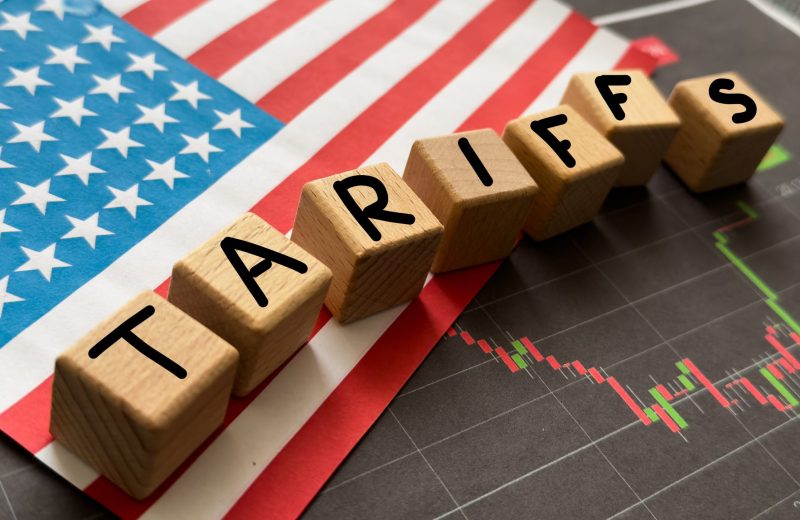
Tariffs really are the news story that keeps giving. Just when you thought things were settling down, the Supreme Court ruled last week that the International Emergency Economic Powers Act does not give the president the right to impose tariffs. It was a six-three decision.
“This may not be the end of tariffs,” says one specialist. “There are other ways of imposing tariffs and it also makes you wonder about existing trade deals that were based on the tariffs Emergency Economic Powers Act.”
In the short term, importers of aircraft may need to wait for US custom systems to be adapted to reflect that tariffs now no longer need to be calculated.
“The bigger question is how the Trump administration will react,” says another lawyer. “There are statutes other than the one involved in the Supreme Court decision that specifically permit the president to enact tariffs, though they require certain factual findings. I expect that Trump will move quickly to reimpose tariffs under one of them.”
In May 2025, the US Department of Commerce’s Bureau of Industry and Security (BIS) initiated a Section 232 investigation into imports of commercial aircraft, jet engines and aircraft parts. BIS said it was seeking to “determine the effects on the national security of imports of commercial aircraft and jet engines, and parts for commercial aircraft and jet engines”.
Impair national security
If BIS tells the president that these imports threaten to impair national security, the president can impose tariffs or other penalties. The BIS report is due soon.
Anyone who paid a tariff to import an aircraft may now be able to claim the money back. “If you paid tariffs, you need to file this weekend in court,” said one lawyer last Friday. “The Supreme Court is basically saying we are not giving the money back but lower courts will.”
Large importers like Costco and Revlon, that hoped the Supreme Court would rule this way, had already filed lawsuits in the US Court of International Trade asking for repayment.
At one point US buyers of Pilatus aircraft were paying 39% tariffs (these were removed in December as part of a US-Swiss trade deal). Some buyers of pre-owned Canadian aircraft that have not already been “trans-shipped” into North America have also paid 25% tariffs.
“My jaw is on the floor. How do you actually get the USA government to refund such a large amount of money?” says one broker whose clients paid tariffs. “It is hard enough to get a tax refund.”
‘Presidential tariff authority’
Justice Brett Kavanagh, one of three judges who dissented against the ruling, was concerned about this issue: “The court’s decision is not likely to greatly restrict presidential tariff authority going forward. But the court’s decision is likely to generate other serious practical consequences in the near term. One issue will be refunds. Refunds of billions of dollars would have significant consequences for the US Treasury. The court says nothing today about whether, and if so how, the government should go about returning the billions of dollars that it has collected from importers. But that process is likely to be a ‘mess,’ as was acknowledged at oral argument.”
Tariffs have hung over aircraft that were not built in the US since a few hours after President Trump’s second inauguration in January 2025. “I always say ‘tariffs’ is the most beautiful word to me in the dictionary,” said the president at the time.
At first there were fears that they would apply to new aircraft from Canada – like Bombardier jets and Bell Helicopters. The US accounted for 56% of Bombardier’s 2025 sales (down from 64% in 2024). But these were later found to be covered by the US Mexico Canada (USMCA) agreement.
Extra tariffs
Key aerospace exporters like the UK, EU and Switzerland also agreed to remove tariffs from aviation products. In January, President Trump threatened extra tariffs against European countries for supporting Greenland. In February, the president also said that he would impose tariffs if Transport Canada did not certificate Bombardier aircraft. “Further, Canada is effectively prohibiting the sale of Gulfstream products in Canada through this very same certification process,” wrote President Trump on Truth Social. “If, for any reason, this situation is not immediately corrected, I am going to charge Canada a 50% tariff on any and all aircraft sold into the United States of America.”
Data from the General Aviation Manufacturers Association shows that 65% of all new business jets went to North America, with 13% to Europe, 11% to Latin America, 6% to Asia and 5% to the Middle East and Africa.
While some are celebrating, not everyone is sure. “Uncertainty is not good for business. All of last year was spent dealing with uncertainty and now we don’t know what the US will do next. It is crazy,” says the broker. “Things had settled down, but the uncertainty now is almost greater than what it was before.”
Please join us for CJI’s fourth Emergency Tariff Town Hall on Thursday, February 26th at 3pm GMT and 10am ET.
UPDATE: Monday, February 23rd, 2026
On Saturday, February 21st, President Donald Trump revealed a new global tariff of 15% . But this does not apply to aircraft or aircraft parts. This offers an opportunity to import business aircraft into the US with no tariff. Ehsan Monfared, partner, YYZlaw told CJI: “We are advising clients looking to sell aircraft into the US to act quickly.”
Subscribe to our free newsletter
For more opinions from Corporate Jet Investor, subscribe to our One Minute Week newsletter.