
Malaysia’s business aviation is cleared for takeoff
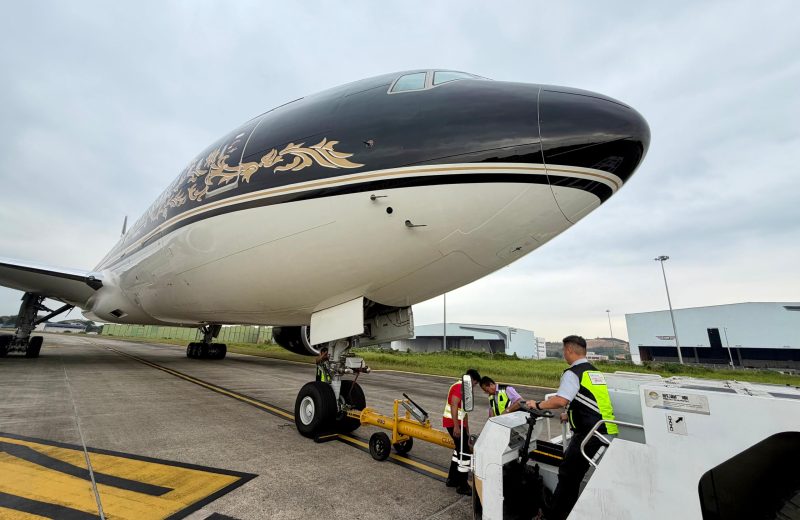
When SkyPark FBO Malaysia Sdn Bhd launched its operations at the Sultan Abdul Aziz Shah Airport (WMSA/SZB) just 20km west of Kuala Lumpur, Malaysia, the country’s business aviation sector was nothing more than niche. Nearly two decades on, the company operates the country’s full-service FBO managing more than 20 flights per day and positioned itself as the complementary hub to Singapore’s Seletar Airport.
Leading this transformation is the company’s general manager Hariss Abdullah. He oversees the SkyPark FBO Malaysia Sdn Bhd operation and SkyPark Regional Aviation Centre Sdn Bhd, which is an integrated 20-acre facility with five-hangar complex, large apron space. Hariss says SkyPark Aviation Group is the “one-stop centre” for business aviation in Malaysia with its capabilities including ground handling services, fuel, inflight catering, hangarage, aircraft washing, crew transportation and other related activities.
Hariss spoke with Corporate Jet Investor to discuss Malaysian business aviation growth in the last two decades.
Paradox
Pandemic was a major black swan event for aviation especially commercial, but it turned out to be a windfall for private aviation especially for Malaysia. “We actually expected the worst,” Hariss tells us. “We thought the travel segment would dive down, just like anywhere else in the region and the world.”
However, opposite happened. As international commercial routes shuttered, high-net-worth travellers who were previously flying first- or business-class on commercial airlines began exploring private jet charter for first time.
“Those who can afford it – the first-class, business-class segment from commercial airlines – started coming in for private aviation.”
Domestic routes saw the biggest surge in demand. Hariss says the routes between Kuala Lumpur and East Malaysian hubs like Kuching and Kota Kinabalu witnessed a sharp uptick in bookings. Meanwhile, air ambulance movements saw double digit growth. “For the BA and GA in Malaysia, I must say 2021 and 2022 was actually the best year for us,” Hariss says. “A lot of profiles that we had never seen before started chartering airplanes to fly around.”
As demand grew, so did supply. Charter operators multiplied and expanded their operations with some buyers booking block hours to guarantee availability. “They probably don’t want to return to the pre-pandemic era, buying a first-class ticket and travelling like any other person,” Hariss says. “Now they have the ease of choosing the time they prefer to fly, the size of aircraft that they need.”
Hariss said a handful of new fliers even went on to purchase pre-owned aircraft. This, he says based on testimonials from them, would have been unthinkable for them before 2020. “They feel like: hang on, this is a new experience. The last two years they’ve been enjoying this, and they probably don’t want to go back,” he says.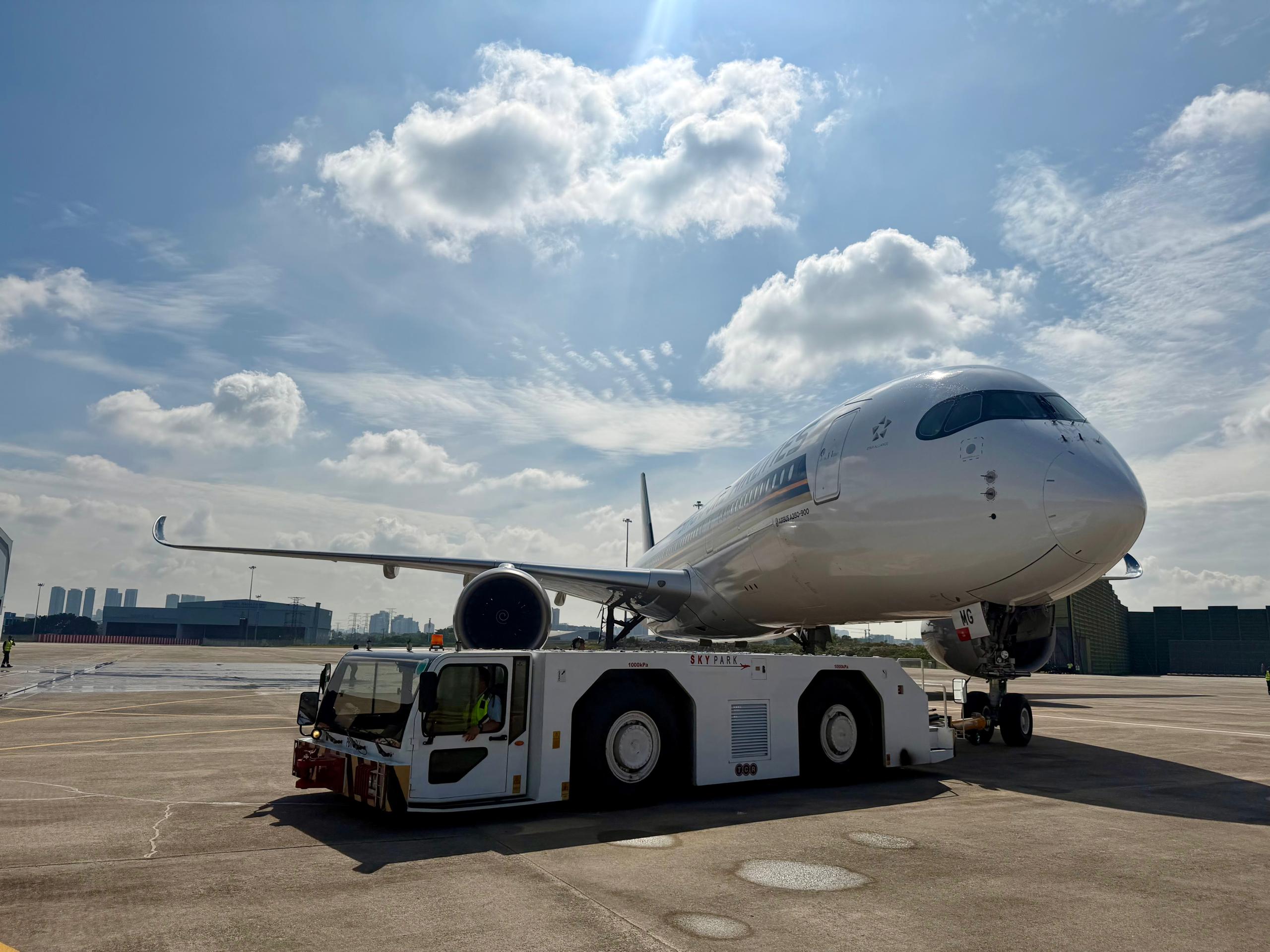
Complementing Singapore
Singapore has remained a hub for private aviation. The country’s business aviation benefits from the presence of original equipment manufacturers such as Bombardier, Gulfstream, Rolls Royce and Pratt & Whitney. In addition, the Seletar Aerospace Park is a dense multi-billion-dollar facility that houses state-of-the-art equipment to maintain jets.
Hariss acknowledges the edge Singapore has in business aviation infrastructure and argues that Subang’s relation with Seletar is complementary rather than competitive. But Subang has distinct advantages over Seletar.
First is the runway at Subang which stretches to 3,780 meters, enough to accommodate wide-body aircraft while that at Seletar is approximately 2,000 metres. Strict laws force Seletar to impose a night-time curfew to ensure residents are not affected by flights while Subang operates the facilities round the clock. Meanwhile, with strong refining and domestic production, Subang also offers cheaper fuel to jets.
“For Subang, being less than an hour from Singapore Seletar, Malaysia plays its role as a complementary hub,” Hariss explains. “Should the aircraft have any AOG problem, we have engineers based here who can sign off for foreign registered aircraft – an engineer readily available to come to the rescue.”
Abdullah says Subang’s 24-hour operations makes it a natural diversion point for any aircraft that cannot land in Singapore after curfew. “Subang always plays a role as a complementary hub for Singapore – and there are a lot of complementary aspects between Seletar and Subang.”
Hariss is equally measured about the broad regional picture of business aviation. Bangkok’s Don Mueang and Jakarta’s Halim Perdana Kusuma both have their own advantages. While the Thai airport benefits from country’s significant scope of leisure tourism, Indonesia’s massive domestic travel demand across its 7,000-island archipelago benefits the Halim airport.
Meanwhile, Vietnam is also pulling its own stream of private jet traffic as it emerges as a major foreign direct investment and manufacturing destination. Instead of viewing these airports as threats to Malaysia’s business aviation sector, Hariss sees the development of these hubs as evidence that Southeast Asia is emerging as an essential destination for global business aviation.
Leisure follows business
While Malaysia fits as a complementary player in the broader region, the demand for private jets is more domestic. The country has a fleet of approximately 40- 45 business jets. State governments remain the major demand driver. The states of Sabah and Sarawak maintain their own fleets to manage near-daily shuttles between Kuala Lumpur and economic centres in eastern part of the country. Sabah and Sarawak are home to the country’s energy corridors and palm oil processing.
Penang sits north of Kuala Lumpur and generates consistent corporate jet traffic due to its foreign direct investment (FDI) base and semiconductor manufacturing base. Further north, Langkawi attracts leisure visitors from China, India and Middle East during travel peaks.
“Langkawi has a seasonal number – it goes high during certain seasons,” Hariss notes. “But Kuching, Kota Kinabalu and Penang have steady numbers.”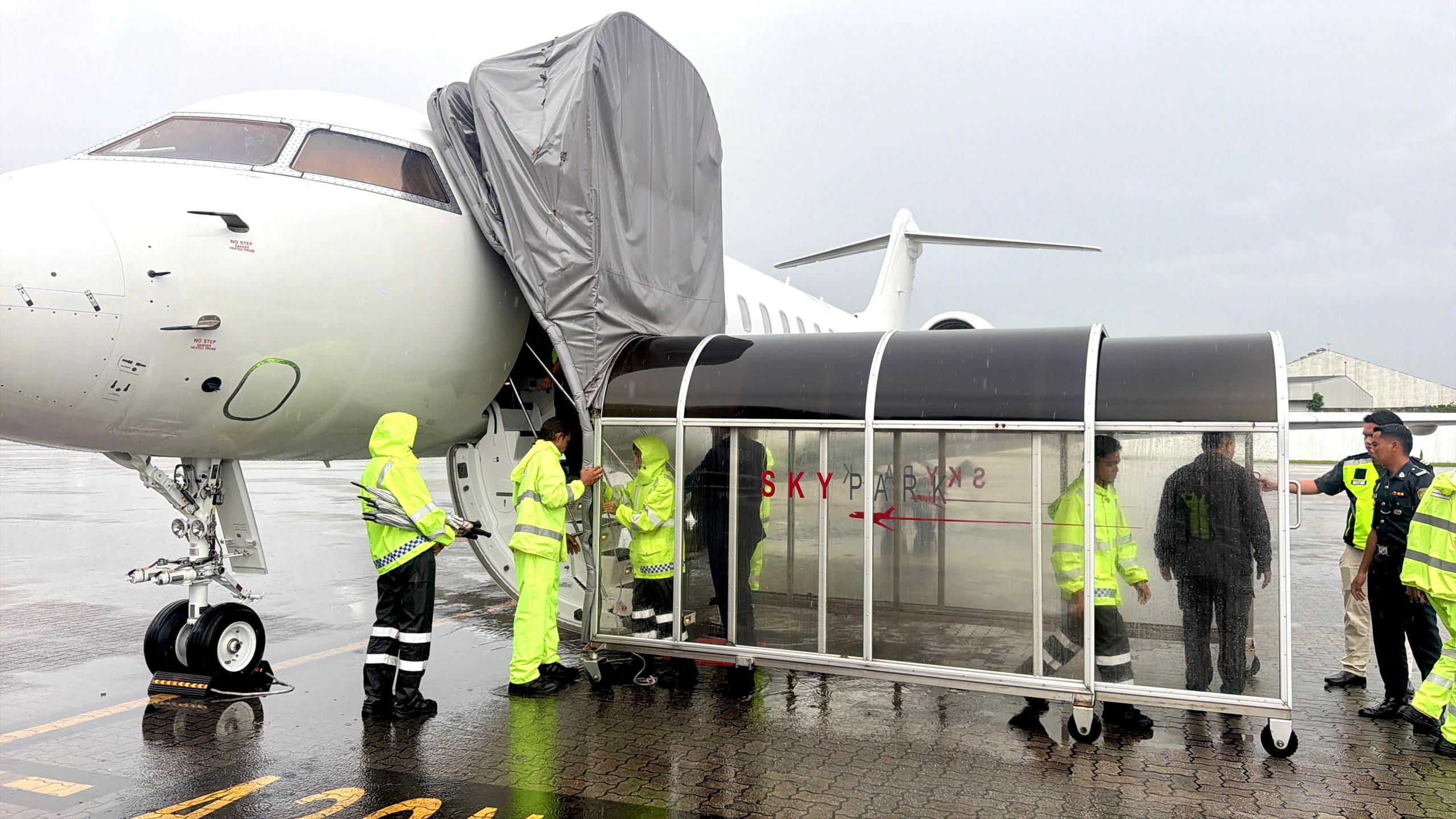
Hariss says in the short-to-medium term, he anticipates the business segment to continue leading the private aviation demand in the country. With the current geopolitical environment, the southeast Asian countries have emerged as stable location to establish manufacturing base.
“A lot of new challenges out there for trade and business means a lot of people are seeking opportunities – government-to-government, business-to-business corporates looking for new, more conducive business environments,” he says. “So, this region will always be in the limelight.”
Leisure traffic, however, argues Hariss, will remain sporadic but seasonal. “Asia can offer beautiful beaches, rainforests, a lot of niches,” Hariss says. “We will continue to see a lot of seasonal traffic – Middle East seasonal holidays and winter travel. But I think business or corporate travel will continue to uphold the strength of the business aviation.”
Sustainability
Hariss says Subang’s top agenda is delivering on sustainability commitments. The company has already made inroads to increase use of sustainable aviation fuel (SAF). The company has moved early. It has signed a memorandum of understanding with national oil refiner Petronas two years ago to raise SAF awareness in the private aviation community.
“Today, SAF is seen as the headline topic for commercial airliners – they need to hit certain quotas before they can get into Europe,” he acknowledges. “But the BA and GA segment does not have as much awareness. So, we have taken the lead to create that awareness and education.”
The agreement involves preparing operators for what’s coming which involves how to incorporate SAF in private jet operations and working with mandates.
“A lot of these corporate jets are owned by public listed companies and big conglomerates already practising ESG at scale. For their corporate jets to purchase SAF will put a tick on their big ESG contribution,” says Hariss.
Singapore already has a SAF mandate and Malaysia is watching the developments closely mulling its own mandate.
“Whether it will materialise or not, we have yet to see,” Hariss says. “But an awareness must be put in place. It’s worth educating the BA and GA segment about what is coming in future.”
The country also has a strategic advantage due to its domestic palm oil and used cooking oil production base – feedstocks that are being used to produce SAF. Utilising this can result in a cost advantage.
Subscribe to our free newsletter
For more opinions from Corporate Jet Investor, subscribe to our One Minute Week newsletter.