
Flyte invests in Volato
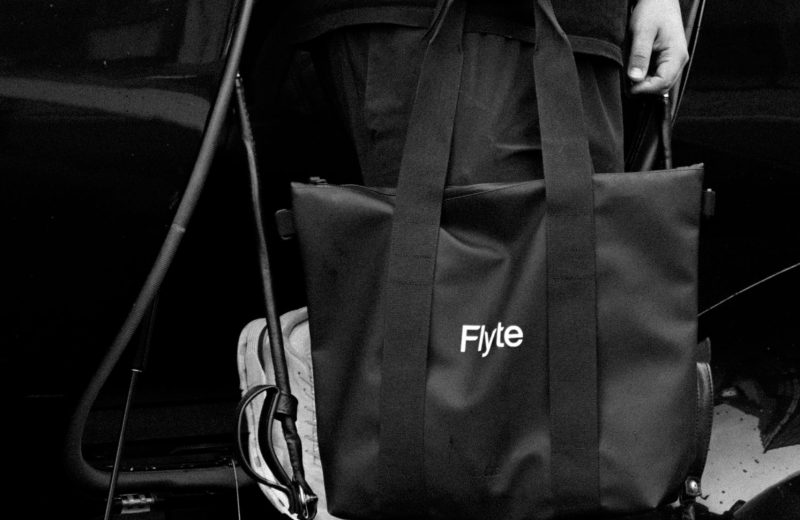
Flyte operates five Vision Jets along the Eastern seaboard.
For Marc Sellouk, CEO, Flyte, the rationale behind his decision to invest in Volato is simple. His planes were flying out full but coming back empty. Volato had a platform to fix the empty-leg problem for them. The logic was clean. Synergies were real. The deal was structured in a way that it came with an equity kicker which covered more than the investment committed from Flyte.
“The return legs that we have, even though they’re paid for, oftentimes they come back empty,” Sellouk tells Corporate Jet Investor. “So, what better way than to add some gravy to that and monetise it through being able to facilitate those empties.”
The partnership with Volato also fits neatly into a broader vision Sellouk has been building since 2018, when he first identified what he saw as a structural gap in regional aviation. “When I peel back the onion, I realise that there was a parallel to what these planes were doing at these smaller airports to the way black cars were operating before Uber came into the marketplace,” he says. “A light bulb went off in my head – why hasn’t anyone, to the extent possible, mimicked what these guys have done terrestrially, aerially?”
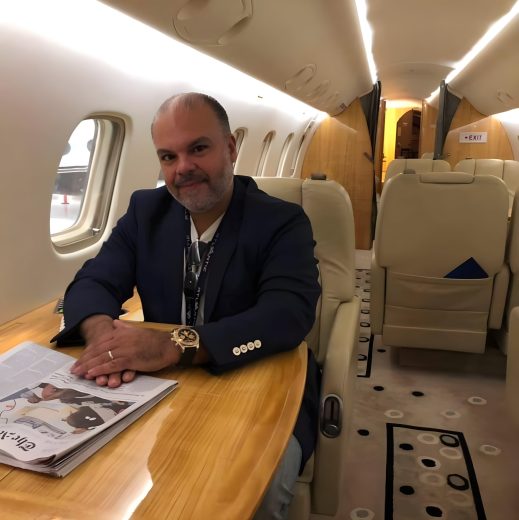
Marc Sellouk. CEO, Flyte
For Volato, on the other hand, the investment from Flyte couldn’t have come at a better time. The former operator is navigating a turbulent chapter. Having sold off its fleet and aviation assets to flyExclusive, the company is in the middle of a reinvention phase.
That process hasn’t been easy. Volato was planning to merge with M2i Global, a critical minerals supply chain company, with the intention to secure a fresh strategic direction. The deal collapsed at the last minute. It financially exposed Volato, which was already facing ongoing NYSE American compliance pressures.
The $2.2m investment from Flyte (led by its parent Catheter Precision) gives Volato the breathing space it needed to execute its artificial intelligence infrastructure strategy. Volato CEO Matt Liotta said in a press release that the collapse of its deal with M2i “gives us the opportunity to refocus on a market opportunity we believe is more closely aligned with Volato’s technology assets, public-company platform, and long-term shareholder value.”
On the Flyte side of the ledger, the corporate changes are showing a similar dynamic. The company’s parent, Catheter Precision, is also undergoing its own version of reinvention. It recently offloaded its legacy medical device business, repositioning itself as a pure-play aviation company. Under the new corporate structure, it will have Flyte as its sole asset. Catheter has also secured $88m in financing commitments, almost all of which is earmarked for expanding Flyte’s fleet.
Catheter, which acted as the lead investor in the investment in Volato, has also secured 451,901 freely tradeable shares of flyExclusive common stock as part of the transaction.
According to the 8-K filing by Volato, dated June 7, 2026, the company intends to issue 6.5m Class A common stock at $0.34 per share. These will be given to Catheter Precision and a group of institutional investors for an investment of $2.21m. But the more important caveat is that as a condition of closing this deal, Volato is required to deliver Catheter Precision 451,901 freely tradeable shares of flyExclusive common stock – the stock it received as part of its asset sale deal with flyExclusive last year.
Alongside the 8-K filing, Volato is also required to file a Registration Rights Agreement within 10 days of signing the initial agreement. This filing is important because without it, the flyExclusive shares will not be freely tradeable.
The flyExclusive position: What it’s actually worth
Speaking to CJI, Sellouk was measured about their strategy on flyExclusive shares. “We’re looking at how this relationship evolves,” he said. “It’s too early on into the relationship to make any sort of definitive strategy.” He said the decision would follow once the shares become freely tradeable.
The 8-K defines ‘freely tradeable’ in the context of flyExclusive as shares issued pursuant to an effective registration statement, represented by unrestricted CUSIP numbers at DTC, listed and admitted for trading on a recognised exchange, and free from any pending delisting or suspension threat.
Simply put, Catheter Precision would receive shares that carry the full liquidity of a clean public equity position. The size of the flyExclusive position, at 451,901 shares, is meaningful, especially against the backdrop of the $2.2m raised. Whether Catheter Precision would treat this stake as a long-term strategic holding, a tradeable asset to be monetised later, or a way to deepen their operating relationship with flyExclusive is something Sellouk says is being worked through.
When pressed on whether Flyte might eventually liquidate the flyExclusive position to reinvest in its own fleet, Sellouk was careful not to close any doors. “Once we have a better idea over the next quarter or two, that will give us a better understanding and sort of crystallise the path,” he said.
What this investment means for Flyte investors
For Flyte, the core proposition has not changed. The company operates five Vision Jets along the Eastern seaboard. It runs a 500-nautical-mile mission envelope. Operationally, Sellouk says they are targeting a cash-flow positive year in 2026. It plans to add eight more Vision Jets by year-end.
The reliance on Vision Jets is deliberate. Sellouk says the company’s goal is to maintain a low price point without cost becoming a barrier to entry. Average ticket prices of $5,000 one-way and $7,200 for a round trip reflect that positioning strategy.
Sellouk says the mission envelope is not a constraint but rather the point. “We don’t burn money through the tailpipes,” he says. “We focus on what we do, we do it best, and we focus on that coverage area.”
That focus also shapes who Flyte is going after. With regional airlines cutting routes to smaller airports, Sellouk sees a growing gap in the market. “There aren’t that many options from a schedule perspective that get you out there,” he says, describing a business traveller needing to be in Washington, D.C. from Boston by 11am. “If you were to utilise a service like ours, it’s on-demand – you get to the airport 10 minutes prior to the flight, and then you’re off and back in time for maybe a late lunch.”
Sellouk says the model is easily replicable. “We’ve cracked the code with the Vision Jet to be able to do sort of a copy and paste in different markets,” he tells us.
With Volato, the company is adding an operational dimension to its strategy by listing its empty legs on the Vaunt platform. “We anticipate that several of our flights will be presented on the Vaunt platform,” Sellouk confirmed, “and we’ll see how that progresses.”
The more compelling narrative on this investment is the flyExclusive equity position. Catheter now holds 451,901 shares of a company which has its own aviation growth trajectory.
“There were a lot of synergies that were there that made a lot of sense for us,” Marc tells us. “flyExclusive has assets in the business – aircraft – that will create a relationship that’s reciprocal in nature as we expand.”
For Flyte (Catheter Precision) and Sellouk, the appeal of Volato began with the goal to monetise their empty legs. But the investment has evolved into something more complex.
Subscribe to our free newsletter
For more opinions from Corporate Jet Investor, subscribe to our One Minute Week newsletter.