
Andrew Svoboda: ‘The only certainty is clients’ needs change’

Over the next five years, success for Phenix Jet Cayman looks like “a very diversified aviation business”, said Svoboda.
“It’s one of my favourite things to do in the world,” said Andrew Svoboda, CEO of Phenix Jet Cayman.
“I love business aviation because it gives you an opportunity to the design creative solutions that clients require. Having the technical background to ensure that it is done correctly, is regulatory compliant and at the highest levels of safety is a challenge that I just enjoy,” he told CJI.
It hasn’t always been this way for Svoboda. His lifelong love of aviation first emerged schlepping around the Alaskan wilderness at 16 in any bush plane whose pilot was willing to let him tag along.
“The pilots, usually flying in Stinson’s or Piper Cubs, were very nice and often would let me play around a little bit with small turns and the like,” he said. “I thought to myself, ‘wow, these guys are actually getting paid to do something fun like this.’ So my initial thought about flying was that I would love to go and be an Alaskan bush pilot.”
After entering and studying aviation, his new-found industry knowledge made two things clear. “One was that bush piloting is an exceptionally dangerous thing to do. The other is, despite the fun, it doesn’t provide much economic income,” he said.
As much of an entrepreneur as he ever aspired to become a bush pilot, Svoboda had founded and sold businesses before he arrived at college. He believes this business-focused attitude stood him in good stead for a career in business aviation. “I was always involved in every company in some sort of management role or business development in parallel from the time I first started aviation,” he said.
After stints as a flight instructor and in the airlines, Svoboda was offered a posting in Beijing, China in the early 2000s. That move, to just south of Shijiazhuang Airport, opened his eyes to the Asian market and Svoboda’s not looked back since (aside from this article).
“I originally had an airline background for the first decade of my career, and I was heavily involved in management as well, as director of operations, chief pilot and director of safety, in parallel to flying,” he recalled. “At that time the Asia aviation market was booming and I knew that, so I thought this would be interesting and went to check it out.”
Svoboda soon relocated to Hong Kong which by 2012 and 2013 was the booming epicenter of business aviation. Shortly after he founded his own set of businesses and eventually took on the partnership which became Phenix Jet Hong Kong and Cayman. “20 years later and I am still here involved in the Asian business markets,” he said.
‘Some things never change’
Phenix Jet Cayman is a blend of Svoboda’s business, management and entrepreneurial experience with his “core love” of the technical side of aviation.
“I’m just very passionate about flying. It’s one of my favourite things to do in the world. Phenix Jet Cayman is just a lot of fun. It’s a wonderful business to work in,” he explained.
Originally known as Phenix Jet Hong Kong, the company began with a handful of employees and has grown into a fully-fledged aircraft management and charter operator, with particular emphasis on digital services both on the front and backend, including cryptocurrency payments. Largely serving clients operating ultra-long-range aircraft, Phenix Jet Cayman and its group manage a fleet of around 20 business jets, mostly made up of large-cabin models such as Bombardier Global 7500, BBJs and Gulfstreams.
“Underlying that, there are some things that never change,” said Svoboda. “There’s always aircraft management, charter services and additional associated services required, because the market is growing.”
But the demands and the needs of the market have shifted greatly, and that will always be the case, especially with business aviation, because so much of what happens on both an international and a financial level impacts the clients, he adds.
For example, post-pandemic and as China has continued to struggle economically, there was a huge shift away from owning aircraft into shared programmes, in addition to a huge spike in charter demand. There has also been diversification in the types of charters required.
“We’re always trying to make sure our platform is as flexible as possible, because the one thing that’s certain is that the needs of the clients change,” said Svoboda. “One of the things we’ve done is make sure we have an entirely digital platform that can be accessed globally, 24/7, to support all of these different services.”
‘Biggest hurdle in Asia is infrastructure’
The feeling around Asia-Pacific as a business aviation market is predominantly positive, like any it waxes and wanes, but Svoboda is quietly confident it will grow to the second largest behind North America in the next five years.
“People have been very bullish on this market for a very long time and for very good reason,” he explained. “It’s well known that as an economy develops more and more upper middle class and ultra high net worth sectors emerge. The knock-on effect is that business aviation climbs in that region.”
He says this continues to show in Asia-Pacific through the number of jet transactions as well as aircraft movements in and out of the region. In 2025, 19 new-build aircraft were delivered, while 70 pre-owned aircraft were added to the Asian fleet. The regional charter fleet reached 430 by mid-2025, a growth of 18.8% from June 2023, according to the Asian Sky Group Charter Report 2025.
Svoboda thinks the biggest challenge of Asia-Pacific is infrastructure and the development of individual government’s support and understanding of business aviation.
“That becomes a bigger stumbling block than global operations for clients. That is being able to utilise what is available to them in the way that they need to because of underlying infrastructure issues, whether that’s parking, airport availability, permits and slot systems,” he said. “There’s all kinds of challenges the region that are in the control of the governments, not necessarily in the hands of private businesses or the individuals themselves.”
But change is certainly possible. A good example is Hong Kong International Airport. When a slot system was introduced at the airport, it was designed entirely for commercial aviation. The Asian Business Aviation Association (AsBAA) discovered that when the airport was planned, business aviation was not even an afterthought.
While 747s and A320s were taking off at 1am, there were no night slots available for G650s, which highlighted the inconsistency in how noise studies were applied. Change took years of campaigning because everything ran through government processes and it had already invested in the original environmental impact study. It required AsBAA to bring together operators, slot providers and service companies like Universal and Jetex to speak with one voice.
“I think advocating strongly not only for the purpose of your clients, but to help to demonstrate through other cases to these governments that enabling business aviation increases their entire revenue profile is key,” said Svoboda. “That has been well demonstrated in other countries, and the industry must help to draw those parallels. Advocation is a very big part of that. AsBAA has been instrumental in that over the years, and we are a large participant of that and supporter of the association.”
Cayman Islands registry
What does an archipelago 250-ish miles south of Cuba have to do with an Asia-based business aviation operator? In Phenix Jet Cayman’s case, a lot.
In sync with his drive to stay at the cutting-edge of technology available to business aviation, Svoboda also wants the same from his registry, and this is what led the firm to set up an air operator certificate (AOC) with the Cayman Islands Registry in February 2020.
While he is clear that all of the positives he sees in the Cayman registry do not denigrate other registries, Svoboda said: “We find that a lot of registries have antiquated regulatory points. Those regulatory sets maybe have not evolved since the 1980s or ‘90s. A a result, they don’t match business aviation today.”
The Cayman Islands Registry is audited by ICAO and falls under direct control of the UK. “They have an exceptionally intelligent design, where they’re able to maintain the highest standard of regulatory safety and oversight globally. But at the same time, you’re able to utilise aircraft in different methods within that construct,” he explained.
That freedom is crucial to meet the ever-evolving demands of Phenix Jet Cayman’s clients. “It has been instrumental in providing that extra layer of digital interface, because all of our regulatory basis is managed digitally with Cayman. That’s a big step for a lot of other regulatory operators. They’ve done that for a long time, and we went to them because they had that,” said Svoboda.

Offering payments via cryptocurrency was a “necessary step” given Phenix Jet Cayman’s commitment to offer as broader range of services to their clients as possible, said Svoboda.
‘Keeping our finger to the wind’
Integrating digital systems into its platform ties back into Svoboda’s love of the technical side of aviation. In January 2026, the operator began offering cryptocurrency payments to its charter clients through a partnership with Deus X Pay.
“We jumped into it. Very carefully,” he said. “It takes a long time to ensure that this type of fintech solution is highly secure for the client. It takes some time to arrive there. But once we were there, we had identified it was absolutely necessary.”
From an investor’s standpoint, whether you believe in cryptocurrency or not, it is a thing in the world. “People are using it heavily,” he continued. “We have a lot of clients who wish to do that. As our core commitment to our clients is to offer as broad a range of customisable service as possible for their utility, this was just a necessary step.
“A lot of clients, in terms of management clients or charter clients, are highly interested in this, particularly because these transitions can often be done much more quickly than fiat platforms.”
He might step into it carefully, but Svoboda and his team constantly have “their finger to the wind” to identify what changes might prompt the addition of new layers to their platform, such as fintech systems.
“If you look at the entire evolution of business aviation, especially in Asia-Pacific, every year in the past 15 years has represented significant change, and that’s in response to significant changes in the macroeconomic and political environments constantly evolve around it,” he explained.
“Within the long-term vision of any company, we are always keeping our on the pulse to what new changes are that we think are realistic, that we need to adapt to, and immediately getting ahead of the curve as much as we can to put those into place. Even if we don’t have a demand for it today, we know it’s going to become a demand, and we can watch these shifts happening.”
Generative AI is certainly one of those changes. Svoboda believes it has a lot of utility in terms of reducing time footprint, particularly in areas like sales and marketing, and some simple office processes like accounting or reservation functions.
“Implementing those things, where they can make you more efficient, save time and help you produce a better quality product, is something that if you’re not doing today, you’re probably already behind the curve,” he noted.
At the same time, Svoboda believes there are technical functions in which AI will prove useful. “But we have to be very careful in watching that because AI is still not a perfect tool,” he warned, of its tendency to hallucinate. “I think we all see that when we use it. It can often give you information that is not quite as it should be relative to what you’re asking.”
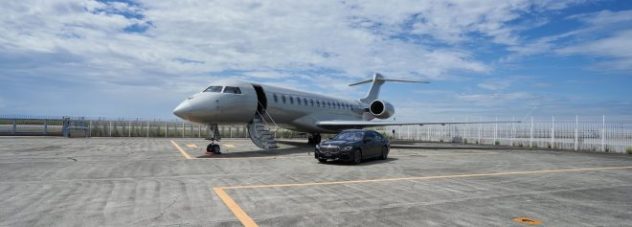
Phenix Jet Cayman manages a fleet of about 20, typically ultra-long range, business jets.
Supply chain migraines
It is the story reported the world over, from aircraft on the ground for weeks or months because a doesn’t a windshield cannot be sourced to operators buying whole aircraft because they need one part.
Whatever your view on the reasons behind supply chain constraints, of which there are many, there is no getting away from their reality, said Svoboda. “Any operator who is active globally is going to face AOG situations. No aircraft is immune to that. Supply chain challenges are real, and they are not something operators can directly control. That’s driven by manufacturers and OEMs,” he explains.
“Fortunately, it doesn’t happen very often, especially with modern equipment and strong maintenance planning,” he added. Phenix Jet Cayman has taken measures to ensure it has access to parts and resources outside of OEM channels, particularly for older aircraft.
“We’ve developed relationships with regulated entities that hold parts inventory, and we’ve often found that if something isn’t available through normal channels, we can source it from another region,” he said. “A lot of parts inventories around the world are not interconnected digitally. Airlines, for example, may have parts available that business aviation operators are not aware of. We’ve used our background and relationships with airlines like Delta and United to source parts when needed. That broader network has been very useful.”
Eyes on diversification
Asked what success looks like for Phenix Jet Cayman over the next five years and Svoboda has one answer: “a very diversified aviation business”. It harks back to his varied aviation experience from bush piloting and cargo to commercial airlines and business aviation.
“One of the reasons I was so intent on setting up the Cayman Islands AOC is that it allows us to expand beyond just business jets. We’re looking at niche markets, whether that’s scheduled services, airline-type support services or cargo operations,” he said.
The company is also watching emerging areas like UAV technology very closely. “Through our partnerships, particularly in Japan, there are already investments being made into UAV development,” he explained. “We’ve had discussions with those partners and with the Cayman regulator about how we would operationalise those technologies once they are ready. It’s about building a business that can adapt and expand across different segments of the industry over time.”