
Jetfly rebranding ‘reflects broadened expertise’

Founded in 1999 in Luxembourg, Jetfly has become one of Europe’s leading fractional aircraft ownership providers with more than 500 owners and a fleet of 70-plus aircraft.
Jetfly Group is rebranding, effective May 1st , as it looks to create a “cohesive identity” across all business lines, including fractional ownership, aircraft management, training, sales and maintenance.
The new visual identity will be rolled out across all communication materials, digital platforms and corporate documents in the coming months, beginning with the launch of Jetfly’s new website. Each business unit is represented by a dedicated colour, allowing it to retain its own distinctive identity.
CJI spoke to Michael Graham, director of sales at a showcase event held at RAF Northolt London FBO on Tuesday.
“The rebrand brings together all of our group companies under one distinctive umbrella and one cohesive brand which reflects and complements our broadened expertise,” Graham told us. “We’ve grown organically and acquired businesses along the way, but like many groups in our industry, we have different identities. Now we’re uniting them under our Jetfly philosophy – service excellence, service delivery, underpinned with a passionate aviation spirit.”
Under the new framework, fractional ownership services continue to operate under the Jetfly name, while its aircraft management business Fly 7 becomes Jetfly Management. All supplemental charter flight requests for Jetfly and Fly 7 are consolidated under Jetfly On-Demand. Legally, Fly 7 Executive Aviation SA is renamed Jetfly Aviation Switzerland SA.
Additionally, Fly 7 Training becomes Jetfly Training, and its maintenance entities Jetfly Technik, Jetfly Technik Suisse and Bournemouth, UK are unified under a single name: Jetfly Technics. Meanwhile, Jetfly’s pre-owned aircraft sales business myLittlePlane becomes Jetfly Trading.
Finally, CaptainJet retains its own identity, as its activities remain complementary yet independent from the group’ operated fleet. “Captain Jet charters third party aircraft, so it was a strategic decision to keep it as a standalone business,” explained Graham.
“Fractional ownership companies have evolved beyond being fractional-only providers to established, dynamic businesses,” he continued. “Fifteen years ago, Jetfly was purely a fractional only operator. Today, our breadth of expertise has widened as a full service, turnkey aviation company, with five complementary business units, able to cater for any aviation client. For example, whole aircraft owners may require a fractional share to supplement their aircraft, whereas, as charter customers’ needs evolve they can move into a share profile.”
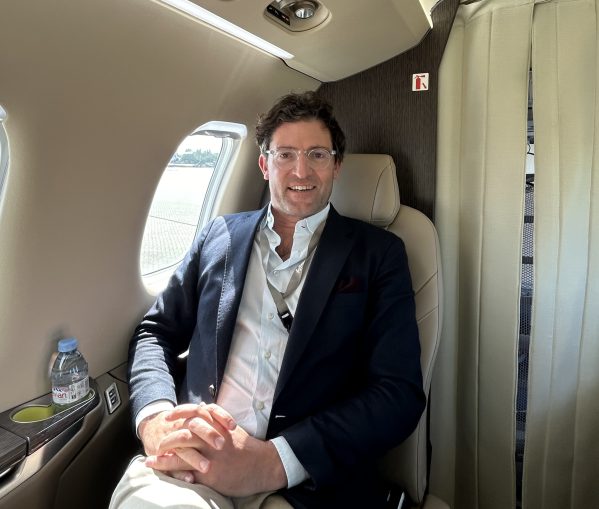
“The rebrand is timely and appropriate, bolstering the Jetfly offering as we enter our 25th year,” said Graham.
“Each business unit enhances our mainstay fractional ownership proposition,” he added. “Jetfly Training ensures Jetfly manages our crew training schedules on time. Having Jetfly maintenance inhouse for our fleet – in Germany, Switzerland and the UK – we can prioritise which aircraft are maintained and when. Timely MRO is critical to keeping our aircraft well maintained and available to fly to an owner’s schedule. Running our own management division specialising in the Jetfly fleet composition [Pilatus PC-12, PC-24 and Cirrus Vision Jet] means that we have supplemental aircraft available to support Jetfly during our peak demand season too.”
Founded in 1999 in Luxembourg, Jetfly has become one of Europe’s leading fractional aircraft ownership providers, with more than 500 owners and a fleet of 70-plus aircraft operating throughout Europe.
Fleet numbers are set to grow by year-end, hinted Graham, noting Jetfly deliberately does not place “excessive orders”.
“In this industry, you must be mindful, because customers place a lot of investment into our group and they expect you to look after that. Over the years, we’ve taken between four and six aircraft per year – and that’s increased a little recently,” he said.
“We will continue to grow whilst maintaining a focus on delivering a highly personalised service. Growth is only sustainable if we maintain this absolute attention to our Jetfly owners,” he added.
Jetfly buys its aircraft brand new, and pre-sells them before they arrive.
“Last year we sold 100 shares, around 50% of them to new customers – a record year for us over the past five years. It’s been solid growth,” he said. “We’re also adding new people across Europe – hiring in Central Eastern Europe, plus additional team members in Italy, France and the UK, where we see more potential.”
Jetfly is witnessing growth too with its UK operations, recently opening a London office in Marylebone. In November 2025, its UK entity secured its own Air Operator’s Certificate (AOC) with the Pilatus PC-12. Previously, Jetfly UK partnered with Ravenair to operate its PC-12s under Ravenair’s UK AOC.
Diminishing connectivity for those outside of key economic hubs is viewed as a potential boost to Jetfly’s fractional programme. “We give customers the power to live remotely while staying connected for business. An entrepreneur gets access to 3,500 airports – three times as many as traditional business aviation – connecting them with major economic hubs.
“Increasing customers’ connectivity is what we do. It’s always been in our DNA. Our ‘Simply Closer’ strapline, which was the centre of Jetfly’s tagline 15–20 years ago, is as relevant today as ever before.
Staying with the theme of increasing connectivity. Jetfly fractional customers could soon be surfing the web at 30,000ft when flying on its PC-24 fleet. The operator is planning to upgrade all 20 of its PC-24s with Gogo Galileo connectivity, commencing from the fourth quarter of this year.
“It took us time to narrow down the system as it is a significant investment and each install grounds the aircraft for two and a half weeks,” said Graham. “With 20 aircraft to implement, it’s a big undertaking. But it’s going to be popular. I can see more corporates and companies looking to buy into PC-24 fractional ownership. With that comes a need for connectivity, and we have to get it right. Gogo Galileo is a product that will stand the test of time.”