
BlueLight Humanitarian Airlines readies to launch
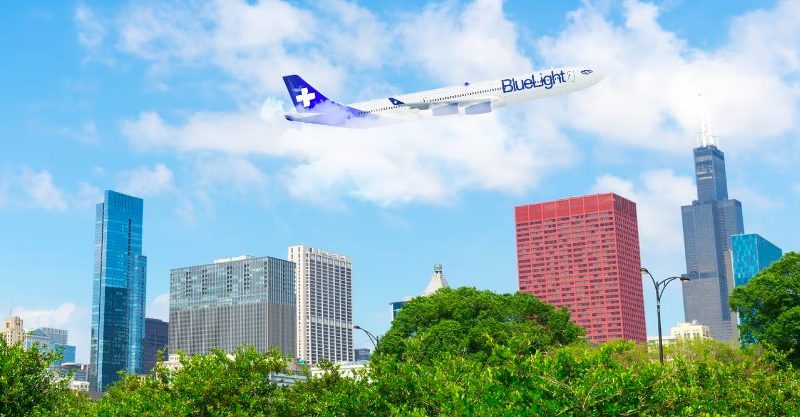
Since publicly launching in October 2025, founders say the reaction has been “unbelievable”.
When Henry Dunant founded the Red Cross in Geneva in 1863, Switzerland already had a track record of providing humanitarian support going back centuries.
Many persecuted peoples have sought refuge in the mountainous European nation: the Huguenots in the 16th century, refugees from the French Revolution, the World Wars and Cold War, as well as asylum seekers today.
Currently finalising deals for its initial two aircraft, Geneva-based BlueLight Humanitarian Airlines is readying to begin operations and potentially mark its footnote in Switzerland’s rich humanitarian history.
Sign up for the Corporate Jet Investor newsletter
Co-founded by Pierre Bernheim (pictured below right) and Waleed Rawat, BlueLight intends to begin operations with two Airbus A340-300s. Each flying about 900 hours per year, these will form the “cornerstone” of the fleet, Bernheim tells us.
Bernheim’s passion for aviation was passed down from his grandfather, who also happens to be the founder of Swiss watch brand Raymond Weil.
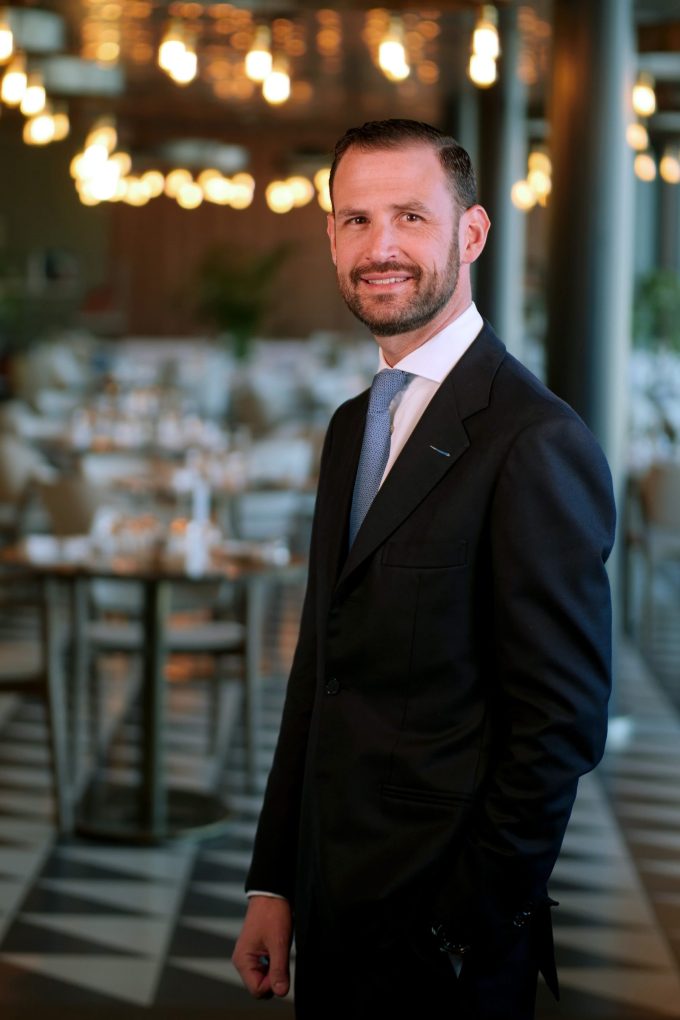
“I was born in a watchmaking family,” says Bernheim. “My grandfather founded the Raymond Weil watch brand, so all family discussions were always about watches.” Having not founded Raymond Weil until he was 50, Bernheim’s grandfather long dreamed of becoming a pilot.
“With the first dividends – of course with my grandmother’s agreement – the first thing he paid for was his private licence,” he adds.
As a young child Bernheim spent considerable time in hospital receiving treatment. He recalls his grandfather coming every week to take him flying. “I could be out for an hour or two and he would drive me to the airfield for a 30-minute or one-hour flight.
“That’s where my passion for aviation started.”
A commercially rated pilot, Bernheim decided not to pursue that route, but wanted to remain within aviation.
Where the idea came from
When he was 25 he wrote to the board of Geneva Airport offering himself as a potential board member in the future. To his surprise, the reply was positive. They wanted him today.
“I became the youngest board member of Geneva Airport and stayed for about 14 years. I was appointed vice president and then president,” says Bernheim.
Two days before the end of his presidency in 2024, a former Geneva Airport employee knocked on his door and presented the idea of BlueLight.
“A commercial pilot and a true humanitarian, he has spent most of his life on humanitarian cargo,” explains Bernheim. “He told me two-thirds of humanitarian tenders for air freight are not properly answered. They are either late, overpriced or delayed so long that the food rots on the ramp.
“I’m relatively new to the humanitarian world. I’m passionate about listening to true humanitarians. They’re unbelievably devoted. My skills are management, I’m not a humanitarian yet; maybe I’m too late to be a true one, but I can offer these skills to the project.”
Following that conversation, Bernheim sought out his co-founder and marketing specialist Rawat, who serves as the airline’s vice president and chief growth officer. “We have known each other two years now and I speak to him more than my wife,” quips Bernheim.
A look inside BlueLight
Looking at the business model, BlueLight is designed to be fully profitable in the sense it will self-sustain, says Bernheim. However, it is structured in such a way that prohibits the founders from taking dividends.
“The point is to be self-sufficient: flying to earn income and pay for everything, but no dividends to founders or managers,” he explains. “Shares cannot be sold. If something happens to me, Walid gets full control; if both of us pass away, everything goes to a foundation or, if we haven’t assigned it, to the government of Geneva.”
READ: Jet Excellence CEO – ‘It’s not a job, it’s a lifestyle’
Being non-profit does not mean BlueLight’s team isn’t dealing with the realities of running an airline, says Cristian Sutter, head of Cabin Re-Engineering. “We need sustained cash flow and our financial model supports that. Non-profit simply means we’re not answering to investors expecting dividends,” he says.
The BlueLight model relies on a fixed-cost recovery rate about 30% below market value. Bernheim says the airline started at a retail price at least 20–25% cheaper than competitors, before building the profit & loss (P&L) statement top to bottom.
“We’ll have a dedicated crew for each aircraft paid at market rates,” he explains. “Freelance pilots will be paid but probably slightly less. We expect savings from partnerships – including with fuel companies. We’ll be 20–30% cheaper, offering fixed pricing and 72-hour availability with global reach.”
Sutter also points out that traditional cargo airlines often have to “de-shuttle” a flight already committed to a contract, which has a cost. “That cost gets passed into humanitarian missions. We don’t have that issue, which is one of the main reasons our pricing can be lower,” he adds.
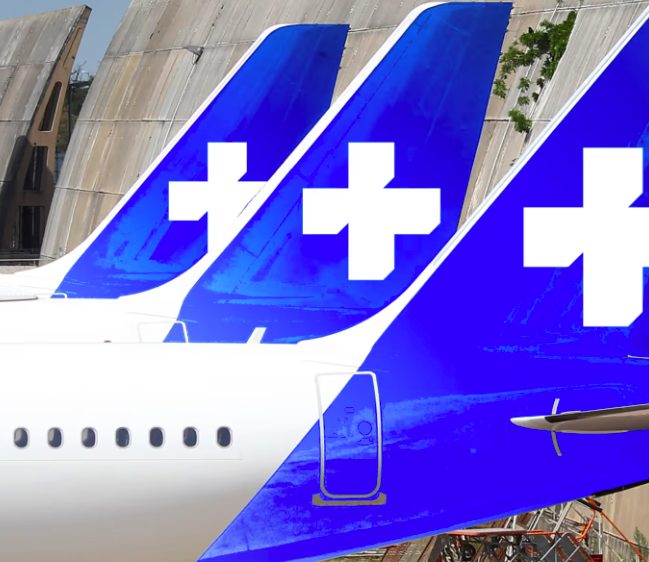
The A340-300 is the right starting point for payload and range, according to Sutter.
The aircraft
BlueLight plans to expand its fleet to as many as five aircraft, including smaller wingspans. Bernheim and Rawat took part in discussions last week regarding the acquisition of two initial aircraft.
“We’re tapping into the second-hand market. Every aircraft has a different history, different green times on airframe and engines. The A340 market is very niche,” says Sutter. “We’re scouting for an aircraft that fits our operational needs. We won’t fly thousands of hours a year, so we have more flexibility. The A340-300 is the right starting point for payload and range. It’s a quadjet, so higher fuel burn but fewer limitations for certain missions.”
The A340 has been identified by Joramco, which has maintained the aircraft and has its full service history.
The plan is to then move to Airbus A330s as the A340s, which ceased production in 2005, approach the end of their service. Sutter points out that aircraft age would be “more of an issue” if BlueLight had a scheduled flight programme.
The business model targets 900 hours per aircraft per year, largely because BlueLight believes this is what a fixed crew can fly per year. “If there is not enough crises, we will fly for everything related to human dignity – medical, evacuation, vaccines, patient transportation,” says Bernheim. “We will do below $50m with two Airbus aircraft per year.”
Despite being a non-profit, the Swiss government said it couldn’t make BlueLight tax exempt because it will fly on some routes that are also offered by other carriers, adds Bernheim.
UAV potential
Looking a little further ahead, BlueLight is considering the idea of deploying an uncrewed aerial vehicle (aka drone) to complete last-mile deliveries in remote or infrastructure-lite environments.
Despite being no more than a rough plan at present, the “Russian doll” concept of aid delivery is likely to feature as part of a fully fledged BlueLight operation in years to come.
“Aid needs last-mile delivery,” Sutter explains. “Sometimes infrastructure isn’t there after a disaster. A multi-modal concept helps: A340 for long-haul, A320 for smaller airfields, UAVs for the final mile. It’s an exciting concept and we’re developing it internally.”
Since publicly launching in October 2025, Bernheim says the reaction has been “unbelievable”. “We have received so many messages from pilots and doctors,” he adds. “We have also raised $8m since going public with the announcement but more support is still needed.”
BlueLight has also contracted with a French management tool provider, Verdeo, which will manage the airline’s dashboard for fund traceability and carbon offsetting. “Through that platform we will track data such as number of passengers, cargo flown, fuel used, destinations reached, response time and so forth,” says Bernheim. “Verdeo is building the first model for us right now.”
When Henry Dunant founded the International Committee of the Red Cross in 1863, it set a precedent that saw the first Geneva Convention signed in 1864 and the founding of the British Red Cross in 1870 (it was called The National Society for Aid to the Sick and Wounded in War).
The world is a very different place today, but the need for humanitarian relief is just as great, if not greater. BlueLight estimates the humanitarian aid industry to be worth $1bn per year; its founders are hoping it can direct an increasing proportion of that directly back into helping people wherever required.