
Beyond Aero using agentic AI to speed aircraft development
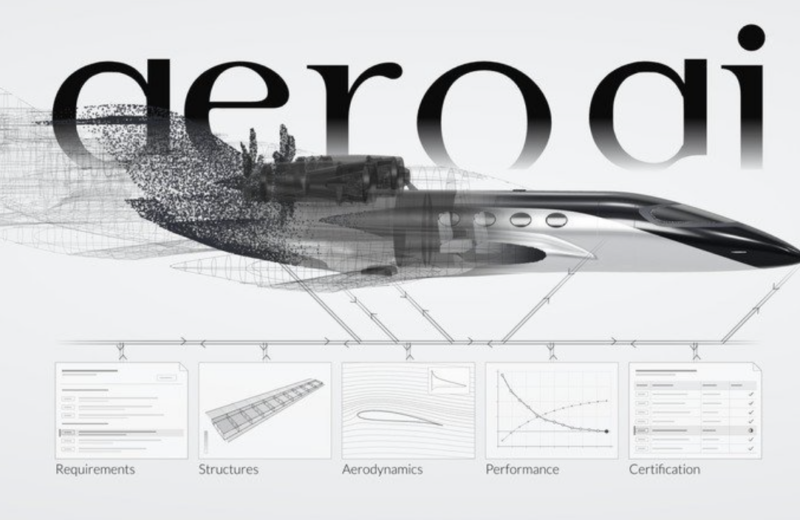
Beyond Aero’s team of 80 engineers is developing One, a six-seat business aircraft featuring electric propulsion powered by hydrogen fuel cells.
French hydrogen-electric aircraft developer Beyond Aero has unveiled AeroAI, its own agentic artificial intelligence (AI) engineering system that it claims reduces engineer-hours per page of certification documentation by more than 200%.
AeroAI is built on Amazon Web Services and accesses foundation models through Amazon Bedrock. It works alongside engineers across every design, study, dataset and certification document. Its agents run around the clock, connect knowledge across the entire programme, trace the impact of every change and draft analyses for engineers to review, shrinking analysis and iteration cycles from months to days, said the company.
Valentin Chomel, co-founder and chief strategy officer at Beyond Aero, is clear that engineering authority does not change because of AeroAI, every output is reviewed, approved and signed by a named, accountable engineer, he told CJI. “We can use AI to propose designs, propose ideas, but it’s never validating or releasing anything by itself.”
Part of the tool is fully deterministic, Chomel explained. That part covers sourcing information against certification requirements, exploring flight test data and releasing documentation. The design-exploration can make errors, he said. In a complex schematic, for example, “a plus Z could become a minus Z” if a reference point is wrong, which is why qualified engineers check and sign off everything AeroAI produces.
Beyond Aero’s team of 80 engineers is developing One, a six-seat business aircraft featuring electric propulsion powered by hydrogen fuel cells, targeted for service entry in the early 2030s.
Jacques-Alexis Verrecchia, head of product at Beyond Aero said: “In aviation, speed means nothing without trust. AeroAI multiplies what our engineers can analyse and iterate, but it never takes their place: every output traces back to our own engineering data, and every decision is signed by an accountable engineer. We don’t see certification as an obstacle to being AI-native. We see it as the proof.”
Sentinel, AeroAI’s set of compliance agents, checks every change — either to the 3D model, a requirement or a test result — against the full indexed corpus and the EASA certification basis. Its design target is to produce an impact map and a proposed action set in under 24 hours. This compares to an industry average of 17 days for a medium engineering change, according to Chomel.
Beyond Aero passed its preliminary design review with EASA in March 2026 with a review package of more than 3,000 validated pages. Fifty engineers produced and validated it in two months while spending about a quarter of their time on it. This equates to roughly 1.3 engineer-hours per page, against an industry norm of 4 to 6 hours for aerospace-grade documentation, said Chomel.
The company deliberately avoided a single headline efficiency figure. It measured the gain on one well-defined work package and compared it with the average time engineers who had joined them from other programmes said the same work had taken there. “It’s really dependent on the problem you’re facing,” said Chomel.
He argued that aviation’s quality management systems make it “pretty robust” against misuse of AI. Those systems let companies test whether AI is genuinely useful or a “fancy buzzword” producing “a lot of useless documents, papers and graphs”.
AeroAI can also project how a potential client might want to use the aircraft. The platform will deliver a three-page study of projections tailored to their needs from a single request. Using the example: “generate the route study Paris Le Bourget to Geneva for this client”, the agent pulled the airports and real flight block times from an index of every flight since 2019, ran Beyond Aero’s own performance model for the aircraft, added competitor figures and airport fees, and cited the source of every figure.
It is also useful in ensuring Beyond Aero selected the correct design for the aircraft. The company used AeroAI to compute more than 500,000 complete aircraft variants, including wing geometry, fuel-cell sizing, battery capacity and propulsion layout. A conventional preliminary design phase typically studies a few dozen.
Beyond Aero acquired assets from defunct hydrogen propulsion developer Universal Hydrogen, which successfully flew a test demonstrator, nicknamed Lightning McClean, in early 2023. The assets included 4.36 TB across 9,500 undocumented files that months of manual effort in 2025 had failed to make usable. This year AeroAI structured the entire archive in about two weeks, according to Chomel.
For the team, the main benefit it time savings. “You spend more time dong actual engineering, where your judgement is needed,” said Chomel. Finding information, writing documents and keeping colleagues aware of changes “is part of the job, but it’s not actual engineering”, he added.
In European regions, AeroAI runs entirely on Amazon Web Services. Amazon Bedrock AgentCore hosts the agents and connects them to the company’s engineering and everyday tools under each engineer’s own access rights, with every step traced for audit. This gives AeroAI access to foundation models from Anthropic, Cohere and Amazon.
Alexandra Lucke, senior startup investor manager and spokesperson, Amazon Web Services said: “Beyond Aero shows what agentic AI can do in one of the most demanding engineering environments there is. By building AeroAI on Amazon Bedrock and Amazon Bedrock AgentCore, its engineers put the best foundation models to work on their own data, securely and in Europe, while every decision stays with an accountable engineer.”
Asked whether AeroAI could be sold to other aircraft developers, Chomel said: “Frankly, it’s an open question for now. Today, it’s not the plan.” He added: “We’re not spending the energy on it today, but we’re pragmatic, so we’ll see.”