A new guest at Yingling’s party: Gregg Fahrenbruch joins as CEO
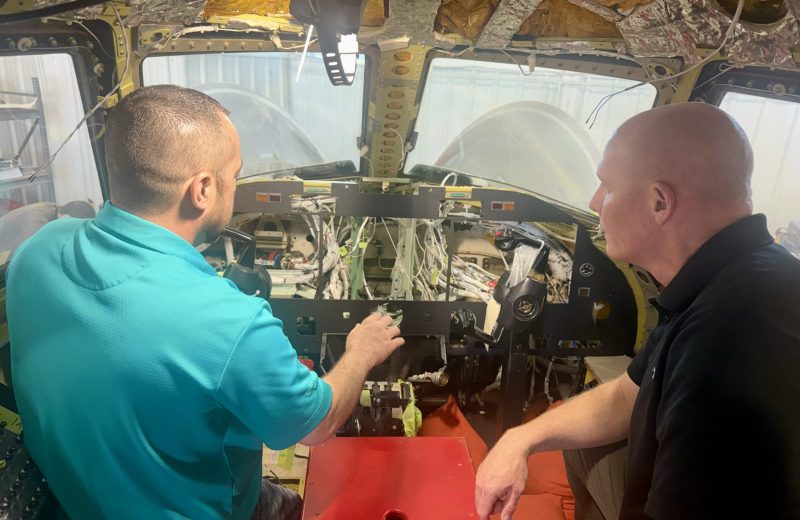
Gregg Fahrenbruch's (pictured right) first port of call at Yingling Aviation is to get out on the “hangar floor” and “listen” to his staff.
It is 14:30 on a Wednesday. A C-130 Hercules approaches the drop zone, the jump master issues the 10-minute warning and hooks into the static line. The stick of trainees ready for their descent.
For Gregg Fahrenbruch, the new CEO of Yingling Aviation, it is a normal midweek. Right out of college, where he was president of the University of Florida’s skydiving club, he began training US Navy SEALs to build instinctive reactions to the high-stress, dangerous work of a paratrooper. Fahrenbruch credits much of his leadership style to the experience formed during those six years.
“College is how I got into it and how I paid the bills – shooting video and instructing. I made the transition to the military side because I had all my ratings and instructor qualifications,” Fahrenbruch told CJI.
“Through the years, I did some fun stuff – base jumping and the like. But I was always more intrigued by instruction and how to advance human performance. How can we teach people better and more efficiently? That translated to the military world – taking a 70-man special forces class and making them fully capable in three weeks, safely and efficiently.”
According to Fahrenbruch, the vast majority of training is risk mitigation – how to think ahead of the power curve and minimise risk. “In business, those early lessons about risk mitigation, when to be aggressive or passive, how to accelerate decision making – that translates perfectly,” he said. “There’s no better training ground as an entrepreneur than jumping out of an aeroplane with a student who has a 50-pound rucksack, weapons and oxygen.”
At Yingling Aviation, which is celebrating its 80th year in business, Fahrenbruch intends to apply the same principles, but his first port of call is to get out on the “hangar floor” and “listen” to his staff.

Yingling Aviation was founded in 1945 as an official Cessna dealer and parts reseller.
“When I met Lynn Nichols, the third owner, I realised the business grew out of passion, family and a hands-on approach. He wasn’t a boardroom CEO; he was on the hangar floor. That family environment kept the company going for 80 years,” he explained.
“The best thing I can do as the next steward is maintain that hangar floor presence and family feel, but augment it with modern AI technology, management information software and supercharge the business – never losing the legacy of Yingling.”
To facilitate his listening, Fahrenbruch is setting up a temporary desk on the hangar floor “every day, listening, partnering and challenging convention”.
“How can we make their job easier? Tool control, inventory. I need to take my CEO hat off and be a support leader. Building partnership with our mechanics is critical for the first 90 days,” he said.
‘CEO hat’
Fahrenbruch is used to wearing his CEO hat. After leaving his career as military parachute instructor in the early 2000s, he saw a shortage and a need for aircraft that could support that training — in part due to aircraft being used in the conflict in Afghanistan. He launched a company, won quite a few government contracts and did some work in Canada and with UK Special Forces.
Seeking opportunity in the commercial sector, in 2014 Fahrenbruch bought Mountain Aviation with some partners. “The goal was to have a commercial backbone but also do government contract work,” he said.
The company built a “great” relationship with Textron and NetJets, and began leasing and buying Citation Excels and Citation Xs. “That exploded. We grew to 45 aircraft and became the largest floating fleet Citation X operator in the country – the fastest growing operator in the US during that timeframe,” he said.
During the Covid pandemic Mountain Aviation was flying heavily for Wheels Up, prompting the latter into proposing an acquisition. The deal was completed in January 2021.
The growth period, which increased revenues about fivefold, makes up the remainder of Fahrenbruch’s leadership philosophy equation. He said Mountain Aviation had to “reinvent” itself “three or four times because we scaled so much”. It added hundreds of pilots, 100-plus mechanics, six hangars and over 60,000sqft of hangar space and established and certified a part 145 repair station all in the space of 18 months.
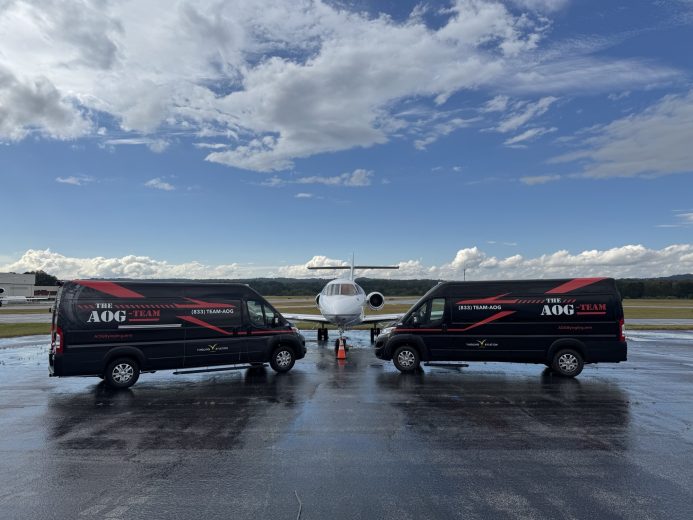
Yingling Aviation’s AOG team consists of specialised technicians available 24/7, 365 days a year.
“It’s about momentum. When you start to build positivity and everyone sees the vision, it’s easier to run at a faster pace sometimes. We financed everything internally, took no outside money, kept executing and building great relationships with customers,” he explained.
Catalysing what he did at Mountain Aviation, and witnessing digital evolution in the flight operations and charter worlds, Fahrenbruch believes the part 145 and MRO sector can do the same.
“We can bring in more tools, build AI [artificial intelligence] backbones to interface with high-performing Part 135 operations. I don’t think it’s necessarily there yet,” he said. “Where are the optimisation tools for the MRO world? I’m really focused on taking what we learned in the Part 135 charter world and meshing that with the 145 world to provide better customer service, hit better timelines and allow the industry to accelerate at a level we haven’t seen yet.”
A self-confessed “geek at heart”, Fahrenbruch is looking forward to integrating society’s new-found computing power into Yingling’s day-to-day operations.
“I have 13 patents pending around integration of AI and business operations,” he said. “We’re doing very cool things behind the scenes with agentic AI companies. There are tools we can build over the next six months to give operators and owners more visibility into our capacity, things like streamlining quotes or accelerating maintenance events.”
Fahrenbruch believes Yingling can work with operators so that availability is constantly optimised by AI, such as offering hangar openings in real time. “Right now, that’s a phone call with ten people looking at schedules,” he said. “There’s an opportunity to connect MRO capacity with operator software – FOS, Jet Insight, FL3XX – so maintenance planners can see real-time availability.”
Dual perspective
Fahrenbruch has owned everything from Gulfstream GIV-SP to a Citation X to five King Airs. He said this puts him in a “unique position”.
“The industry is dissected – folks go down the maintenance path or the operations path, and they don’t really cross over. I’m unique. I’ve been a customer. I’ve been overcharged, felt neglected. I understand the customer experience,” he explained. “I’ve also been an operator, managed other people’s aircraft, had tough discussions about maintenance bills, part shortages and pilot shortages. We pushed Citation Xs at 150 hours a month, trying to get maximum reliability.”
Having the perspective of an owner, an operator and building a 145 to maximise capability – “that’s the trifecta”, he said.
“When I walked Yingling’s facility, I was shocked by the capability – the paint, interior, modification. We need to tell that story,” he continued. “I want to improve processes and harness my experience to integrate better with customers – spot-on communications, timeliness, cost controls. I don’t want the customer to ask for it. I’m going to build that.”
Long-term strategy
Private investment firm AE Industrial – which specialises in markets including aerospace, national security and industrial services – bought a majority share in Yingling Aviation in June 2023. Having AE Industrial as a partner will “supercharge” growth under his tenure, said Fahrenbruch.
“They’ve been phenomenal. I was interviewing them too – their interest, passion and ability to let the business grow. Our chairman, Sean Vick, has been in the industry forever,” he noted. “They’re saying: ‘Gregg, go do what you need to do. Be a tactical CEO. Work with the team. Let us know when you’re ready to talk strategic.
“They didn’t lay down a firm timeline or tell me exactly how to run the business. They want to partner with the executive leadership team. That flexibility is so important.”
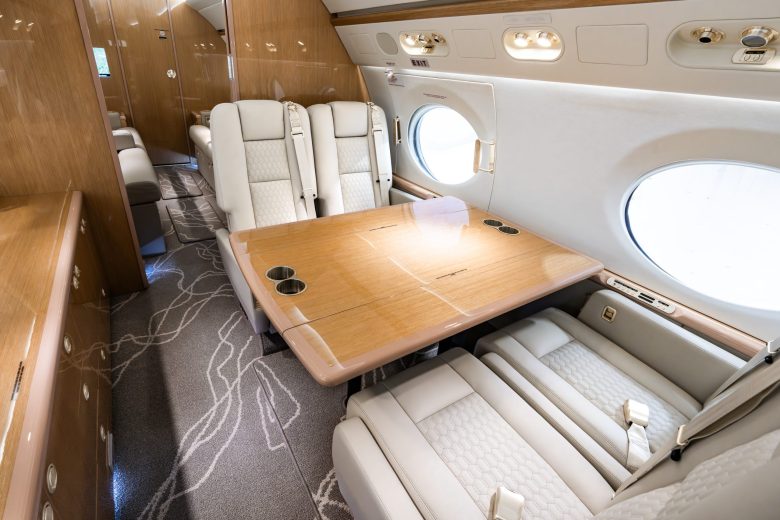
A Gulfstream G550 interior refurbished by Yingling.
Fahrenbruch plans to expand Yingling’s MRO capability while nurturing the core Citation and Cessna product line business it is renowned for. He said he was “caught off guard” by the firm’s ability to service Challengers, Globals and Gulfstreams.
“The heavy jet investment over the last 18 months has been massive,” he continued. “With so many new aircraft rolling off the line, there’s not a lot of new MRO capacity. The industry needs more capacity. So we’re focused on growing traditional capabilities around Citations and King Airs, but also growing heavy jets and ultra-long-range aircraft.”
Talent, where art thou?
The hardest part of forming any strategy is ensuring it will have the engineering talent to take on the work, said Fahrenbruch. Wichita, Kansas-based Yingling has partnerships with Wichita State University to develop talent and bring in apprentices.
“I’d love to snap my fingers and say we’ll be able to do 20 heavy jets at any time in six months. But even if we have hangar capacity, we’ll need to keep growing capability with personnel over the next 18 months,” he said. “Having and retaining talent is the challenge for any shop in the US.”
It is a problem that is exacerbating. A recent report by consulting firm Oliver Wyman said a surge in retirement will see 45,000 skilled aviation mechanics leaving the profession over the next decade.
Using the example of a sheet metal worker, Fahrenbruch said: “It takes so long to build experience. It is not just sheet metal, but sheet metal that knows Gulfstreams or Globals. It takes 10 years to build a subject matter expert. We need to invest in pay scales and the big picture.”
Luckily, Wichita relative to many other parts of the US has a “reasonable” cost of living which allows Yingling to offer services at a more competitive price point.
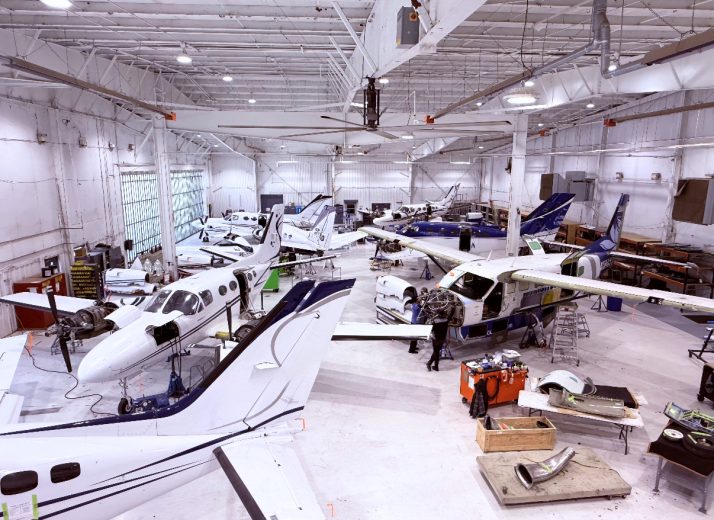
In 2025, the firm added 60,000sqft of hangar space through the acquisition of Global Engineering & Technology.
“In Denver, where I have stood up businesses before, a home is $750,000. In the Northeast, a mechanic commands $80–$90 an hour. A technician can build a life in Wichita for much less,” he said. “That’s an advantage. I’m excited about partnering with Wichita and the local community.”
Yet, if Fahrenbruch had to tell you what keeps him up at night, it would be the shortage of technicians. “Anyone not thinking about the mechanic shortage is fooling themselves. Genuine engagement and investment in the team is super important,” he said.
Yingling at 90
Asked what article he would like to read commemorating Yingling’s 90th birthday, Fahrenbruch would like to see a combination of new technology and company tradition.
“Continuing the Yingling legacy – the family feel, culture, and relationships with customers,” he said. “Not only do we retain that, but we grow capability, become more sophisticated. Customer service becomes technologically advanced – quotes within 24 hours, data and information customers need. Never losing that 80-year legacy of personal relationship, but combining it with technology.
“In ten years, we can be the pride of the industry.”