
Elevate app ‘addresses opportunity to access broader market’ says CEO
Readying to launch its client-facing app that could attract 25% of the 40,000 families flying privately in the US, Elevate Aviation Group CEO Greg Raiff said the company is addressing a previously untapped opportunity to “access the broader market”.
Two years in development and built upon 18 years of data and 30 years in operation, Raiff believes the app can significantly expand the outreach of Elevate Aviation and funnel more prospective clients into its core business model.
Elevate is planning to launch the app publicly at the end of February.
“We realised a few years ago, call it year 28, that we had built this, forgive me for the cliche, bespoke model that arguably delivered the best aircraft management and charter service management consultancy on the planet,” Raiff told CJI.
“What we were missing was an opportunity to address the broader market,” he added.
Luckily, Elevate had already been building TripGrade, a software system that integrates sales, sourcing and account management to help the company better manage its charter brokerage business.
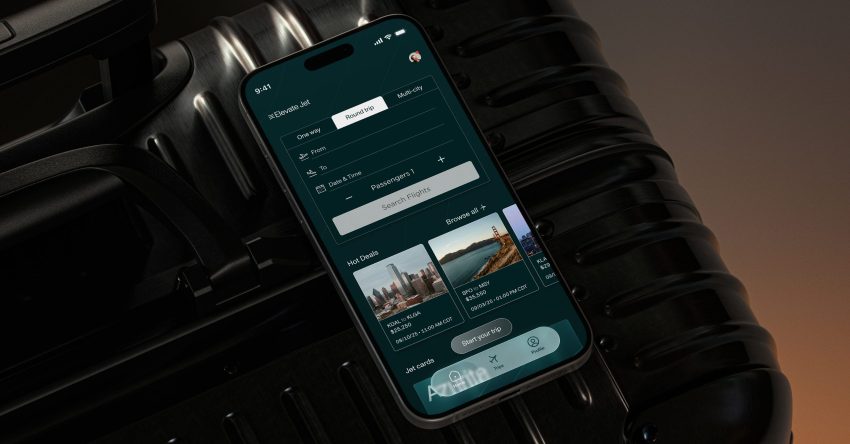
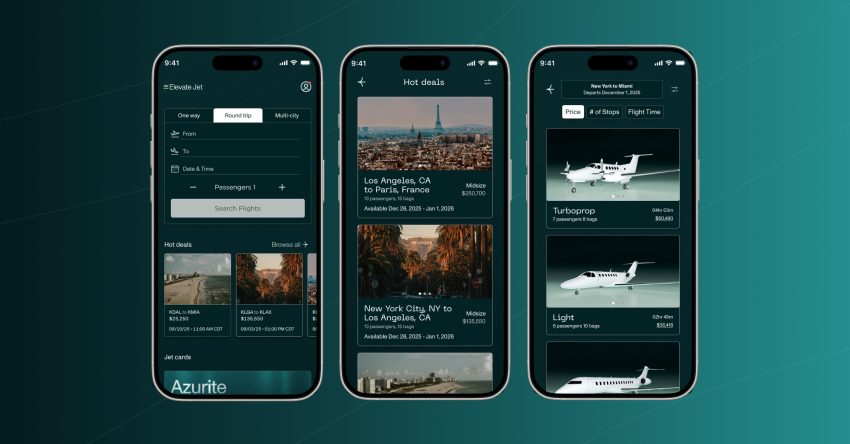
By bolting TripGrade together with its in-house database and powering the new combined system with a proprietary AI agent named Ruby, the app delivers “instant” — between two and six seconds typically — and “transparent” pricing across six aircraft categories, from light to ultra long range jets. Ruby analyses factors such as range, availability, fuel requirements, crew limits and airport constraints to match each trip with the right aircraft.
The app can be downloaded onto a smartphone (this is how CJI got an early look) or used as web app, accessed via a browser.
“We can offer people far more cost-effective pricing by leveraging our own database and our 30 years of experience, because we know what it will cost to fly from Tenerife to Van Nuys next Wednesday,” said Raiff. “We’ve been doing this since the Wright Brothers.
“What we really needed was a way of delivering that information to customers and empowering them very quickly to decide, yes, this is right for me, or no, I’m going to stick with my fractional concept, or with American Airlines, whatever it might be.”
Raiff is confident the app positions Elevate to dialogue with 10,000 of the 40,000 families flying private in the US each year without adding more staff to the business, besides the development team and support staff for the app.
“That allows us to create a highly more scalable model,” said Raiff. “And of course, the hope is that in the process of that, we will discover a few more people that are more appropriate for that bespoke service that we’ve been offering since 1995.”
What makes it different to other apps?
Back in late 2023, CJI surveyed the business aviation industry to find out how many companies were developing software products. At the time, there were over 150, many were apps, and that number has grown since.
Raiff believes that while the Elevate app has a slick user interface, “any marketing group can do that”.
“I think most apps in our space are really just sort of lead generators. Tell us where you want to go. Tell us when you want to go. How many people. Give us your email and your phone, and someone will call you,” he said.
He likes to describe Elevate’s app using the example of Uber. “When I booked my Uber to get to my airplane this morning, I didn’t have to talk to anybody. Nobody had to look at the pricing and get back to me. This app is designed the same way. You get almost instantaneous pricing. If you put in your credit card and tell us it’s okay to use those funds, you’re done. You’ve booked it as easily as Uber Eats could send pizza to your house.”
Outlining the app’s pricing hypothesis, Raiff said. “If you’re willing to spend $30,000, you’re probably willing to wait an extra second or two to make sure you get it right. But you also deserve to get your answer faster because you’re spending so much more money.”
Resource tool
Raiff thinks the app will be a useful resource for corporate flight departments and pilots. Giving the example of a chief pilot of a Gulfstream G550 that has a mechanical, he said: “Being able to pull out your phone and tell the boss in the back of the airplane that the backup is on its way because you’ve already booked it, that’s really valuable.”
He also believes it will be used by flight departments to assess charter costs versus fractional, jet card or commercial. “You can almost instantaneously get a market quote in real time without ever having to deal with anyone. You just get the information,” said Raiff.
As a man who has ordered groceries to his home online — alongside more than 50% of Americans, according to multiple studies — Raiff knows he is paying a premium for that service, “but its worth it for the convenience”.
“If we can deliver instant pricing to customers, we think that that’s highly valuable to people that want to know ‘what does it cost me to go from A to B on this date on this kind of an airplane?’,” he said.
Getting ahead of the curve
Raiff predicts that half of all jobs in aviation — office-based jobs, dispatchers, flight planners, customer service agents, charter quotas, charter bookers, charter schedulers — could begin to disappear in the next three years.
He believes artificial intelligence (AI) will handle the “repetitive, time-consuming back-and-forth”, freeing aviation professionals to focus on “higher-value” work like “relationships, service and strategy”.
“Our industry has been plagued with a barbell problem,” he explained. “You’re either an OEM or a large fleet or fractional provider with hundreds of aircraft. Or you are a mom and pop outfit.
“I believe that ‘real’ AI s going to invade every aspect of the business. That is going to create a new barrier to entry for a lot of these mom and pops.”
Charter companies can take hours, even a half day, to deliver a quote to a customer, he said. Raiff is confident the Elevate app will deliver 20 quotes in a fraction of that time. “We could have booked that instantaneously and you would have paid for them instantaneously,” he noted. “That is such a wild departure from the way business is done just last year.
“We don’t charge a membership fee, you don’t pay an annual due. Anyone can get on, create a profile, get a quote and never talk to us ever again. I won’t say that the Elevate app is going to transform the industry. I would say AI is going to transform the industry and we are out front with this product.”
By the term “real AI”, Raiff doesn’t mean using an Excel spreadsheet to “drive a price”.
“Real AI is looking at, ‘Hey, you’re going to the Super Bowl. The special event fee is $25,000. Parking isn’t available. I’ve got to charge you to reposition the airplane. Here is the price.’ Which prevents us from having to go back to you later and say: ‘Sorry we didn’t calculate any of that. We have to actually add 30,000 bucks onto your quote,’” he explained.
Wheels Up inspiration
Over its 30 or so years in business, Elevate Aviation has steadily evolved into what Raiff calls a “fully integrated services platform”.
“We agree with something that Wheels Up was based on years ago. One of the things they did really well is they attracted thousands and thousands of users very quickly from launch,” he said. “No one can argue they did a tremendous job building a customer base fast.”
Profit has not been a problem for Elevate. Raiff said he would put his company’s margins up against any business in the industry. “We believe, following on that Wheels Up model, we can attract users at the low entry point of a single charter,” he said. “We then bring them into our network, onto our platform and hopefully grow that relationship to provide them other services.”
Elevate plans to take people looking to graduate from ad hoc charter to buying a jet card. It will then take those on jet cards clients who want to buy an aircraft which Elevate can manage or assist with pre-purchase inspections.
“We believe that attracting customers into our platform is highly profitable because of the lifetime value of that relationship once we’ve created it,” he concluded. “That’s the investment thesis behind what we’ve built.”