
Buying charter with crypto ‘no longer a novelty’, says Swapin’s Ivar Jaanus
“The biggest challenge is still market education and helping businesses understand what accepting crypto actually looks like in practice," says Jaanus.
The days of buying pizza with Bitcoin are long gone. Although the regret of those who did is probably still quite fresh.
In recent years, cryptocurrency, in particular stablecoins which are tied to fiat currency, has begun to mature from a speculative asset into a financial tool, especially in luxury markets like real estate, superyachting and private aviation. For a growing demographic of digitally native clientele, stablecoins provide the price stability and transaction simplicity needed for large transactions.
To explore how cryptocurrency payments are impacting the way charters, and sometimes whole aircraft purchases, are paid for, CJI sat down with Ivar Jaanus, head of business development at Estonia-based crypto payment processor Swapin. After initially targeting other markets, the company has seen its business grow significantly in the private aviation sector since 2022.
From adoption trends and application programming interface (API) integrations to the challenges of market education and the importance of personal service, Jaanus takes through where he sees crypto payments fitting into the space, and where they’re headed next.

Payment links are usually the easiest place for businesses to start because they can begin accepting crypto almost immediately, says Jaanus.
What specific trends are you seeing in crypto adoption within private aviation, and how do you plan to expand your market reach over the next two-three years?
Jaanus: “We’re seeing crypto move from being a novelty to becoming another payment option clients expect to have. A few years ago, requests were mostly coming from crypto-native customers. Today, we’re also seeing entrepreneurs, investors and international clients who simply hold part of their wealth in stablecoins and want to spend it without unnecessary steps.
Private aviation is a natural fit because transactions are often international, time-sensitive and high value. If someone wants to book a flight at short notice, waiting for international bank transfers isn’t ideal.
“Over the next few years, our focus isn’t on convincing the market that crypto is coming. We’re expanding through partnerships with operators, brokers and booking platforms that want to offer another payment method without changing how they receive funds. For them, crypto should feel like another payment rail rather than a separate business.
“We’re also starting to see the network effect take hold. The private aviation industry is surprisingly well connected, and word travels fast when something works. More and more of our conversations now come through introductions and recommendations from existing clients, which is probably the strongest validation we can ask for because these businesses tend to trust referrals from people they already know.”
What key success or ROI metrics do you typically track with your aviation partners, and how has client feedback shaped your service?
“The first metric is adoption. Are customers actually choosing crypto when it’s available? If they are, it usually means there was demand that wasn’t being served before.
“We also look at repeat customers and, of course, settlement speed, because that’s one of the main reasons clients choose to pay with crypto in the first place. In private aviation, where bookings can be made at very short notice, being able to complete a payment quickly really matters.
“Client feedback has shaped our product in very practical ways. Simplicity has always been one of our main priorities because businesses don’t want another system that creates extra admin or operational work. Brokers and charter operators are focused on delivering a premium service, so the payment process has to fit naturally into what they’re already doing rather than adding another layer of complexity.
“Most of the improvements we’ve made have come directly from conversations with clients and solving real-world problems they’ve encountered. That’s how we’ve approached product development from the beginning, and it’s still how we prioritise new features today.”
Beyond payment links, how do you plan to develop your API and other technology to integrate with aviation booking or management software?
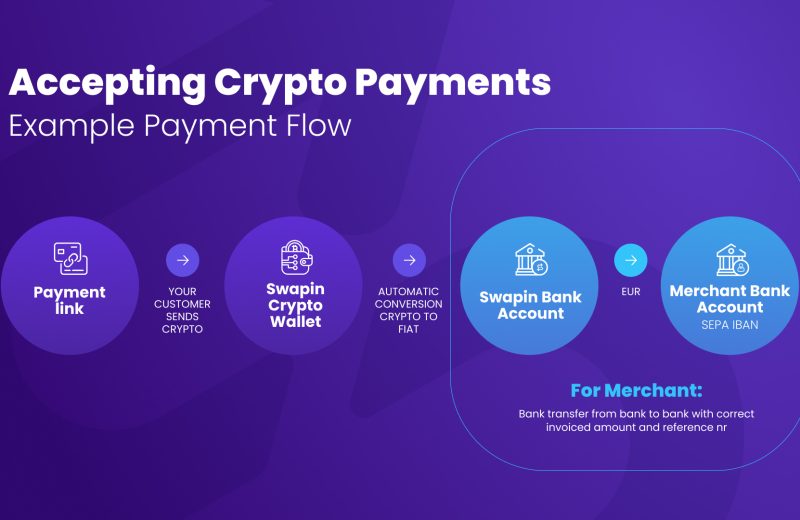
“Payment links are usually the easiest place for businesses to start because they can begin accepting crypto almost immediately. In many cases it’s as simple as adding a payment link to an invoice, sending it over WhatsApp, or embedding it into an online booking flow. If a client walks into the office and wants to pay on the spot, they can simply scan a QR code and complete the payment on their phone in a few taps. It’s a quick way to start accepting crypto without changing any existing processes.
“As transaction volumes grow, businesses naturally start looking for deeper integrations. Our API gives them the flexibility to integrate crypto payments directly into their own platforms and workflows, whether that’s a booking system, CRM or another internal tool.
“In private aviation, payment flows are generally quite straightforward. A client pays in crypto, most commonly stable coins, while the operator receives fiat such as EUR, GBP or USD. Because of that, the integration itself is relatively simple for developers and can usually be incorporated into existing systems without significant effort.”
For a private aviation operator, why should they offer crypto payments?
“The first reason is to meet customer expectations. A growing number of private aviation clients already hold digital assets, particularly stable coins, and they increasingly expect to be able to use them for larger purchases instead of converting funds first.
“That said, demand isn’t the same everywhere. It varies significantly by region and by the type of clients an operator serves. If your customer base is primarily established European clients (old money) and you have no plans to expand into new markets, you may not receive many requests to pay with crypto. On the other hand, operators working with clients from Asia, Latin America or countries with less stable local currencies are much more likely to encounter customers who already hold wealth in stablecoins and expect to be able to pay that way. In those markets, offering crypto payments is becoming less of a differentiator and more of an expectation. Method of payment is also dependant on the age of the customer, and younger high net worth individuals are more likely to pay with virtual currencies. Between 2028 and 2048, an estimated $100tr in wealth will likely move from Boomers to Millennials and Gen Z, who are more likely to use crypto as a payment method.
“The second reason is speed. Charter flights often need to be confirmed at short notice, and international bank transfers don’t always move at the pace the customer needs. They can also involve multiple intermediary banks, introducing delays and unnecessary friction into what should be a straightforward booking process. Giving clients the option to pay with crypto removes much of that friction while allowing the operator to receive euros directly into their bank account.”
What presents the biggest challenge to Swapin in expanding its aviation business line?
“The biggest challenge is still market education and helping businesses understand what accepting crypto actually looks like in practice.
“A lot of people still assume they’ll need to manage wallets, deal with price volatility or completely change their accounting processes, even though that no longer reflects how modern crypto payment providers operate. When crypto payments come up, there’s often still a degree of scepticism that comes from the early days of the industry, when most people associated crypto almost exclusively with Bitcoin or, more recently, highly speculative meme coins. The reality is quite different today. Around 85% of our transaction volume comes from stablecoins, with Bitcoin and Ethereum making up most of the remainder.
“Being licensed and regulated in the EU also helps build confidence. Businesses know they’re working with a provider that operates within one of the world’s most comprehensive regulatory frameworks, with clear compliance requirements and customer protection standards. That reassurance is especially important when companies are processing high-value transactions.
Private aviation is also a relationship-driven industry where trust is built over time. When you’re dealing with aircraft charters and other high-value services, partnerships are rarely formed overnight, so building credibility and long-term relationships naturally takes longer than in many other industries.”
How does Swapin differentiate itself from other crypto payment processors for transactions like aircraft charters?
“If I had to point to one thing that regularly comes up in conversations with clients, including businesses switching to us from other providers, it’s the level of personal service. The luxury sector works differently, and businesses expect the same level of attention from their partners that they provide to their own clients. When you’re processing high-value transactions, nobody wants to submit a support ticket and wait a day for a reply if there’s a question about a payment. They want to speak to someone who knows their business and can resolve the issue quickly. That’s something we’ve invested in from the beginning, and it’s one of the reasons clients stay with us and recommend us to others.”
Looking ahead, what new features or services are you considering to stay ahead of industry changes?
“Our platform already supports virtually all of the digital assets that are commonly used for payments today, with stablecoins accounting for the vast majority of transaction volume. From time to time we receive requests for additional settlement currencies or specific payment flows, but overall the product already covers the needs of most businesses accepting crypto.
“Because we work across several luxury industries, product development is often driven by real customer requirements rather than trends in the crypto market. Different jurisdictions have different payment expectations and regulatory considerations, and we also see increasingly complex transaction flows, whether that’s high-value real estate purchases, yacht sales or other large cross-border transactions. Those conversations help shape our roadmap far more than simply adding support for another token.”