
Three elements driving demand in Middle East, finds ACJ research
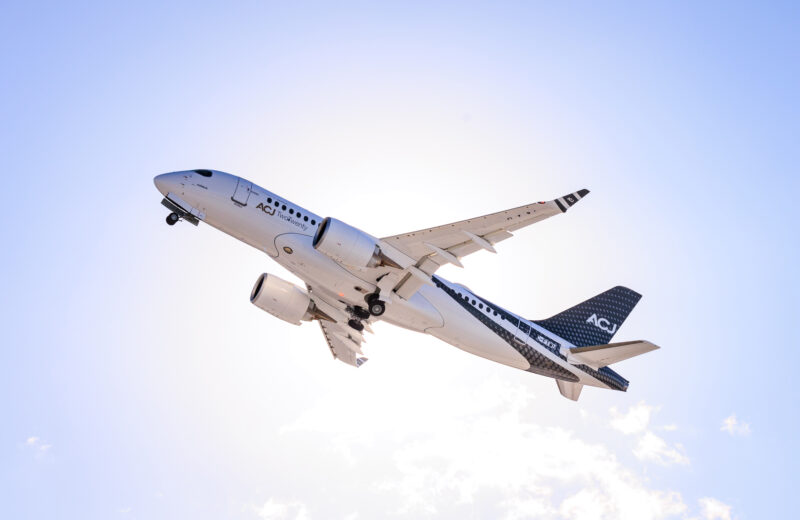
Airbus' ACJ TwoTwenty offers 12 hours of non-stop range.
Flexibility, technology innovation and sustainability are driving demand for corporate aviation in the Middle East, according to new research from Airbus Corporate Jets (ACJ).
The survey of 35 business aviation financiers and brokers across the Middle East, timed to release with the return of Corporate Jet Investor in Dubai, found widespread expectations of growth in flight activity across light, midsize and large business jets over the coming years.
Chadi Saade, president of ACJ said: “Business aviation is evolving rapidly in the Middle East. Organisations increasingly value the flexibility, security and productivity that private aircraft provide. At the same time, technology is transforming the sector. Artificial intelligence and predictive maintenance are helping operators improve efficiency, while new connectivity solutions allow passengers to remain fully productive throughout their journey.
This outlook is supported by the region’s role in the global market. The Middle East currently represents roughly one-third of the global bizliner fleet. There is also a strong demand for fleet renewal becoming evident, with approximately 40% of the regional fleet reaching a nominal 15 year in-service replacement cycle .
Expectations are strong for the larger aircraft segment, 83% of respondents predict flight activity in large business jets to increase between now and 2030, including 37% who anticipate a dramatic demand. Demand is expected to grow across all aircraft categories, with 80% forecasting increased use of light jets and 78% expecting higher utilisation of midsize aircraft.
Technology is supporting this growth. Nine in 10 (89%) respondents believe the use of artificial intelligence to optimise flight planning, reduce fuel burn and predict maintenance requirements will increase over the next five years. Additionally, 72% expect next-generation low Earth orbit (LEO) satellite connectivity to have a positive impact on business aircraft sales and operations through to 2030.
“Sustainability is also becoming a central consideration,” said Saade. “The growing use of Sustainable Aviation Fuel and increasing demand for fuel-efficient aircraft demonstrate that environmental and operational performance are now closely linked.”
Around 83% expect Sustainable Aviation Fuel (SAF) usage to increase over the next five years, while 92% say buyers are placing greater emphasis on fuel efficiency when evaluating aircraft purchases. While more than three in four believe the use of SAF “book and claim” programmes will increase through to 2030.
“Together these trends point towards a business aviation market that is not only growing, but becoming smarter, more connected and more sustainable,” added Saade.