
Capital Jets adds Learjet 60XR, expands operations
Sutliffe said while Capital Jets specialises in the Learjet airframe, that does not mean the operator is opposed to bringing on a variety of different aircraft types.
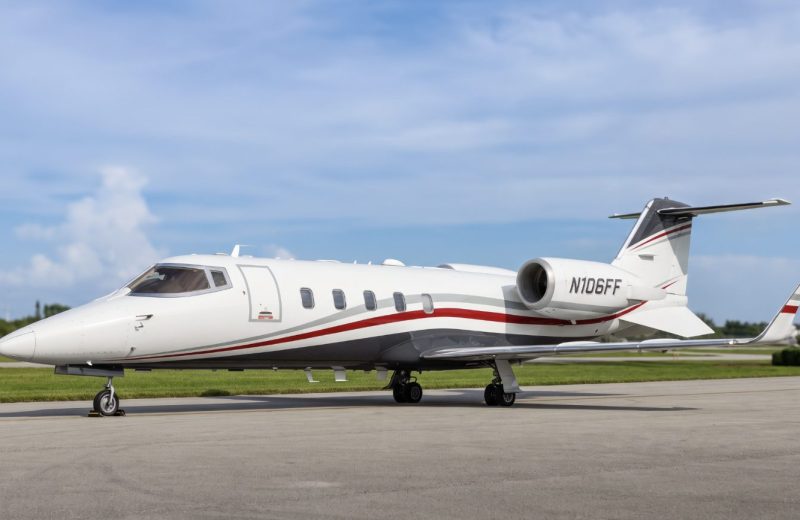
Capital Jets has added a Learjet 60XR as the young operator looks to expand operations on the US east coast.
The Learjet brings Capital’s fleet to two aircraft. It had previously operated a third, but this has been sold and replaced by the 60XR. The other aircraft in the fleet is a Learjet 60.
The team, made up of its Part 119 leadership, maintenance division and two-and-a-half crews, sits just under 20-strong, with more additions planned as the operator looks to expand its acquisitions and management divisions.
Nathaniel Sutliffe, vice president, operations at Capital Jets told us: “The Learjet is a proven platform. It offers great capabilities for where we’re situated. We serve a lot of clients on the Miami to New York corridor, and we also provide services throughout the Caribbean, as well as in Canada and Mexico. Being at the intersection of those two major markets is really key for us.”

Looking ahead, Sutliffe said he does not want to “tie his hands” by putting an exact number on how many aircraft Capital Jets will be operating in three to five years.
Sutliffe started with the predecessor of Capital Jets about five years ago. The first Learjet was originally operated by a separate third-party operator under its own certificate. The team saw an opportunity to increase operational control and began the transition to operating under its own certificate as Capital Jets.
“That’s really where the vision for Capital Jets started to take shape. We enjoyed every aspect of running aircraft, and we wanted to go through the certification process ourselves, which eventually led us to where we are today,” he said.
“We began that certification process at the end of 2021 and worked through it until 2024, when we completed our proving runs and started offering charter services on the market around June of that year.”
Building trust as a new operator in a crowded market has been the biggest hurdle.
Fortunately, said Sutliffe, “through our responsiveness, proactivity and competency, I think we’ve gained the credibility we were looking for from the community”.
“The addition of our new aircraft is really in response to the demand we’ve already been experiencing. It frees us from that practical limitation and allows us to accept more of those requests instead of having to turn them away,” he added.
Focusing on growth plans, Sutliffe said while Capital Jets specialises in the Learjet airframe, that does not mean the operator is opposed to bringing on a variety of different aircraft types.
“Our goal is to eventually make it up to the heavy and ultra-long-range size aircraft, and anything in between,” he said. “Turboprops can also be valuable—we find a ton of demand for them in the Caribbean market, as well as in the Boston to DC area and the Miami to Florida corridor, going out to the Bahamas.”
For now, Capital Jets is just serving wholesale brokers and management clients. It may expand directly into retail as it takes on more aircraft, hinted Sutliffe.
“At the core of our model, we focus heavily on a floating fleet strategy. If we have management clients based out of key markets like Southern California or the Dallas-Fort Worth area who want to keep their aircraft there, that’s not an impediment to us,” he explained. “It’s attractive and smart to strategically place different markers for Capital Jets around the country, and it will expand our capability to serve clients efficiently and grow the Capital Jets name.”
The operator also recently launched an aircraft sales and acquisition department.
“We’d been fielding a lot of requests for management, so we decided it was time to expand it into its own sector of Capital Jets,” he explained. “It’s a smart addition, not only because we’re conducting those transactions in-house, but also because we’ll be able to manage the aircraft with our in-house maintenance, operational control and safety and compliance teams.”
Looking ahead, Sutliffe said he does not want to “tie his hands” by putting an exact number on how many aircraft Capital Jets will be operating in three to five years.
“Nonetheless, I definitely want to see a multitude of segments and sizes in our fleet. I want a team filled with satisfied members who are here for the love of aviation. I want clients who trust us because nobody can serve them better. I want pilots who show up to work excited to fly,” he said.