
Financing demand holds firm as Global Jet Capital closes 9th securitisation
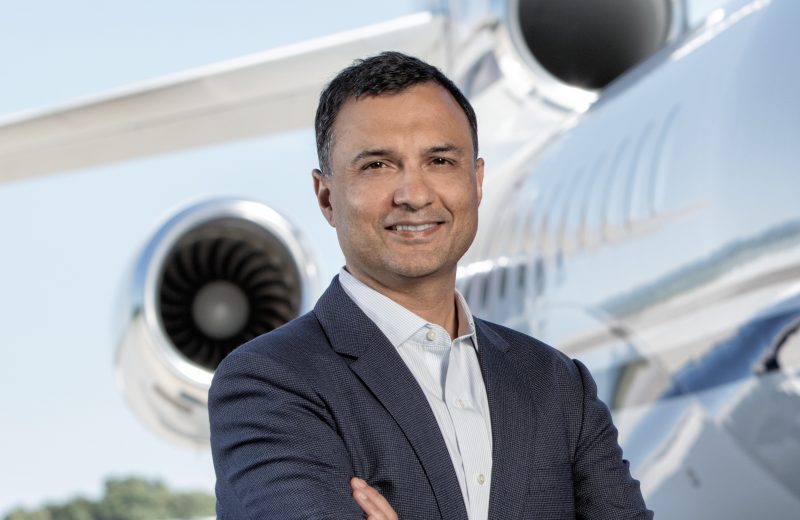
Kaushal says the company's strength lies in its deep relationships across the industry – brokers, dealers and aircraft management companies.
Vivek Kaushal, CEO of Global Jet Capital, says the market for business aviation jet financing is showing no signs of slowing. Investor appetite for this asset class remains strong, as evidenced by the company’s latest securitisation being oversubscribed just weeks after launch.
Global Jet Capital closed its ninth asset-backed securitisation, BJETS 2026-1, raising $659m from 41 investors, 12 of whom were entirely new to the programme. For Kaushal, who has led the company since July 2021, the level of interest reflects confidence in the underlying health of the business aviation industry itself.
“Solid OEM orders and backlogs, robust aviation activity, solid pre-owned market trends – these are all indicators of good industry health,” he told Corporate Jet Investor. “It’s very clear that the industry is in a good place. It has absolutely attained a higher plateau post-pandemic and has been operating under the new normal in a very stable and predictable way for the last several years.”
Founded in 2014, Global Jet Capital has financed over $5.5bn in transactions across its 12 years in operation. The company’s flagship product is the operating lease – a structure that allows aircraft buyers to reduce the capital tied up in an asset while eliminating residual value risk. Once the lease ends, customers are able to upgrade, extend, or exit, giving them a flexibility that outright ownership cannot.
“It’s a very well understood set of products,” Kaushal said. “We believe in partnership with the intermediaries in the industry. We think of ourselves as an essential part of that ecosystem, providing another solution within that ecosystem to the universe of aircraft buyers and operators.”
Global Jet Capital operates with a team of 58 people. Kaushal says the company’s strength lies in its deep relationships across the industry – brokers, dealers and aircraft management companies are among the key pillars of its network, playing what he describes as an essential role in market transparency and safety standards.
While those relationships drive origination, the company’s cornerstone funding strategy has been the ABS market – asset-backed securitisation – since 2018. Global Jet Capital has issued nearly $5.5 billion in notes during that period and describes itself as the second-largest aviation issuer in the ABS market in aggregate.
The BJETS 2026-1 deal pools 28 leases and loans across 20 industries, covering 16 different aircraft models. It is structured in three tranches – Class A, B and C – each carrying a different risk and return profile. Class A investors receive priority of payment and carry the lowest risk; Class C investors accept subordination in exchange for a higher return.
“What tranching does is it takes the cash flows coming from the pool of assets and sets up a hierarchy within the investor group of who gets what and with what priority,” Kaushal explained. “It helps to match up the appetite of different investors for risk and reward. The pricing of the notes is entirely market-driven – driven by demand and supply.”
The deal was oversubscribed. This appetite, Kaushal says, gives the issuer a degree of pricing leverage, even though the market ultimately sets the terms.
One of the more nuanced challenges in aircraft leasing is residual value risk – the question of what a jet will be worth at the end of its lease term. Kaushal is clear about how Global Jet Capital approaches this.
“The residual is not our destiny,” he said. “We look at the lease as a living, breathing instrument. We’re in constant contact with our customers. This is not a one and done financial transaction – this is a working asset for our clients.”
The company has its portfolios appraised semi-annually by three independent appraisers and maintains in-house capabilities to remarket, re-lease or sell aircraft when leases expire.
Critically, Global Jet Capital does not hedge residual value risk in the traditional financial sense. “We don’t go out and hedge this risk because we are highly conversant with the assets and know how to manage them through the lease life cycle while providing our clients the flexibility they need,” Kaushal said.
When asked about maintaining interest, Kaushal says sustaining interest from investors requires more than good performance and communication is key. Global Jet Capital’s approach involves attending maintaining a steady cadence of investor meetings throughout the year, including at major securitisation conferences.
Global Jet Capital was also the first issuer in the aviation sector to return to the ABS market after the pandemic. It launched the first ABS transaction in October 2020 and has issued five more time since. This track record, Kaushal says has results in investor comfort with the BJETS offering.
“The fact that this issuance has been out there for the length of time that it has, and that we have been to the market multiple times – our issuance, its particularities, its structure is very well understood by investors,” he said. “They can see how well it has performed.”
Subscribe to our free newsletter
For more opinions from Corporate Jet Investor, subscribe to our One Minute Week newsletter.