
Ricci relieved
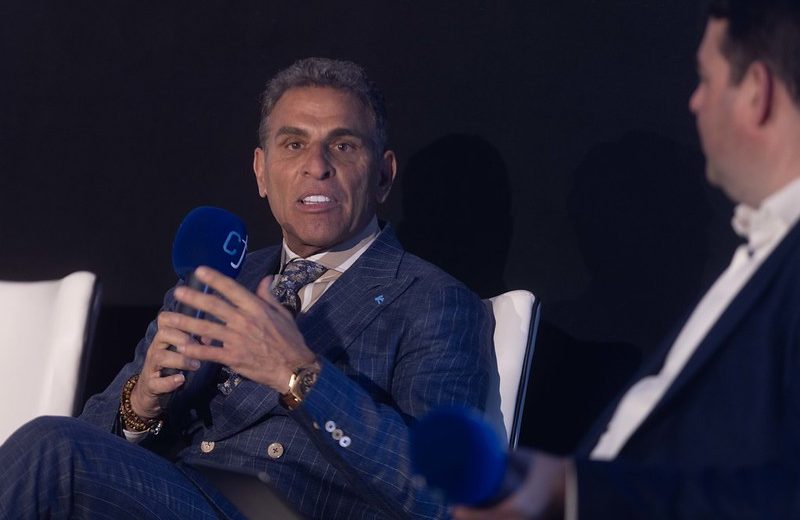
Kenn Ricci is not particularly happy for someone who has just received $470m in cash (and another $575m in credit). The chair of Flexjet is relieved that the three-year dispute between his company and Honeywell is over. He will not miss sitting in a New York state court.
But he believes that is just one example of the way in which aircraft owners and operators are being badly treated by manufacturers and suppliers. This case may be over, but it is just the start for him.
This case goes back to the engine maintenance agreement that Flexjet and Honeywell negotiated in March 2019. Before this, Flexjet used N1, its own engine maintenance company, to support Honeywell HTF7000 engines (which power its Bombardier Challenger and Embraer Praetor fleet).
Honeywell suggested that the company switch to an hourly cost maintenance programme. As part of the deal, which eventually covered about 120 aircraft, Flexjet agreed to shut N1. Honeywell would take over all maintenance on the engines. It also agreed to pay $30,000 in compensation for every day that an engine was not returned after either four days or 30 days – depending on the type of problem.
“This all started because we had the only competing engine overall shop and they wanted us out. I was able to extract a transaction because of that leverage,” says Ricci. “This was nothing more than the fact that they made a bad deal and then they did not want to live by it.”
In a court filing, Flexjet said Honeywell was already behind on maintenance by April 2019. It says it took 77 days to replace two engines and then the damages were slow in coming. Flexjet and Honeywell started having formal discussions about the agreement from July 2019 onwards.
“There were people in our organisation that were sending engines but not getting them back. But it didn’t kind of percolate to my level until about six months in,” says Ricci. “In the start of the summer, I said, ‘Let me come and see you. Let’s have lunch’. But that took two months to schedule because they didn’t want to address this issue.”
In October 2021 Honeywell wrote to Flexjet saying it was cancelling the contract. It said it could do this because it was subject to a Force Majeure caused by supply chain issues following Covid and the sudden rise in flights when lockdowns ended. A call between both sides became heated in November 2021.
Flexjet was not happy. It hired Quinn Emanuel and asked it to litigate. The law firm’s homepage proudly cites research naming it as: “The law firm most feared globally by large businesses.” In a very large font.
The case never made it to a jury. But there were hearings in front of a judge in a New York state court. Ricci and his wife Pamela attended all of them. “We went because I know this business and I knew that no one senior at Honeywell was going to go to those hearings. I wanted the judge to see how important it was to me and my family,” says Ricci. “We got a good judge who knows business. He did also ask me some questions, including whether we would settle this and I said yes.”
Ricci says that going to court was an experience. “It was nothing like you see on television,” he says. “It was more like my second-grade classroom. There’s stuff piled up over here. There’s a video board, there’s a chalkboard. It was a state court. They don’t have the budget to re-stain the wood and they are not putting new leather on the chairs.”
Quinn Emanuel argued that the Force Majeure could not apply if Honeywell was still delivering new engines to aircraft manufacturers and repairing engines for other operators. Flexjet won the summary judgement. It then won judgement on liquidated damages. Honeywell appealed and lost. In the summary judgement hearing, the judge ruled in Flexjet’s favour on three out of four points. Honeywell and Flexjet chose to settle this final point rather than go to court.
“If we could have avoided the fight, we would have. I want to run the business, not fight. Even after this success, I would have gradually settled this and brought it to conclusion three years ago,” he says.
The official press release from the engine manufacturer says: “Honeywell and Flexjet are pleased to have reached a comprehensive agreement to resolve their pending litigation and look forward to rebuilding the parties’ commercial partnership.”
This could happen. Ricci says that Jim Currier, who took over as president and CEO of Honeywell Aerospace in November 2025, helped settle the case. “He inherited this, but I think that if he had been there from the start we might not have had this problem,” says Ricci. “He clearly does not want to have bad customer service.” Ricci is also disappointed that StandardAero and Duncan Aviation also became involved in separate litigation as part of the Honeywell and Flexjet disagreement. These cases have also been settled.
Ricci says that this is just one example of how aircraft owners and operators are treated unfairly. “I’ll give you two other big issues. One is event fees; it’s a lunar eclipse so FBOs are charging an event fee. The other is that aircraft manufacturers must provide repair and overhaul manuals on everything that is on the plane, and they don’t. We run into this a lot and the FAA does not enforce it,” says Ricci.
He says that the money they receive in the settlement is not the key issue. “I mean this humbly, but it made me realise that I can be a lightning rod for the industry. That I can speak out and influence our industry,” says Ricci. “I didn’t want to be in court, I wish I had not had to be. But now I realise that there are things I need to champion for the industry.”
He may have won this battle, but for Ricci, the war is just starting.
Subscribe to our free newsletter
For more opinions from Corporate Jet Investor, subscribe to our One Minute Week newsletter.